
Choosing the most affordable roofing material today could actually be the most expensive mistake you make for your Hawaii home over the next decade. While a standard installation might look acceptable on paper, Oahu’s unique combination of intense UV radiation and corrosive salt air creates a high-stakes environment where average materials quickly fail. Most homeowners simply want a roof that provides peace of mind during hurricane season and helps manage the relentless tropical heat without requiring a full replacement every fifteen years.
We understand that protecting your property is a significant responsibility that requires a specialized approach. This guide provides a detailed comparison of asphalt shingles vs metal roofing Oahu to help you evaluate which system aligns with your long-term goals for durability and value. You will learn how the latest 160 mph wind-rated technologies perform in our local microclimates and how new state regulations regarding "white roofs" affect your material choices. We will examine the realistic lifespan of premium architectural shingles compared to the fifty years of service offered by standing seam metal; this ensures you have the professional clarity needed to make a confident decision for your home’s future.
Key Takeaways
- Understand how Oahu’s unique combination of intense UV exposure and salt air accelerates the aging process of standard roofing materials.
- Discover how modern heavyweight shingles use algae-resistant technology to maintain their appearance in high-humidity areas like Pearl City.
- Compare the long-term performance and value of asphalt shingles vs metal roofing Oahu when facing 160 mph hurricane-force winds.
- Learn to match your roofing material choice to your specific neighborhood microclimate, from the dry leeward plains to the salt-heavy Windward Coast.
- Realize why professional installation and specialized flashing details are the most critical factors in achieving a thirty-year lifespan for your island home.
The Oahu Roof Challenge: Why Material Choice is a Technical Decision
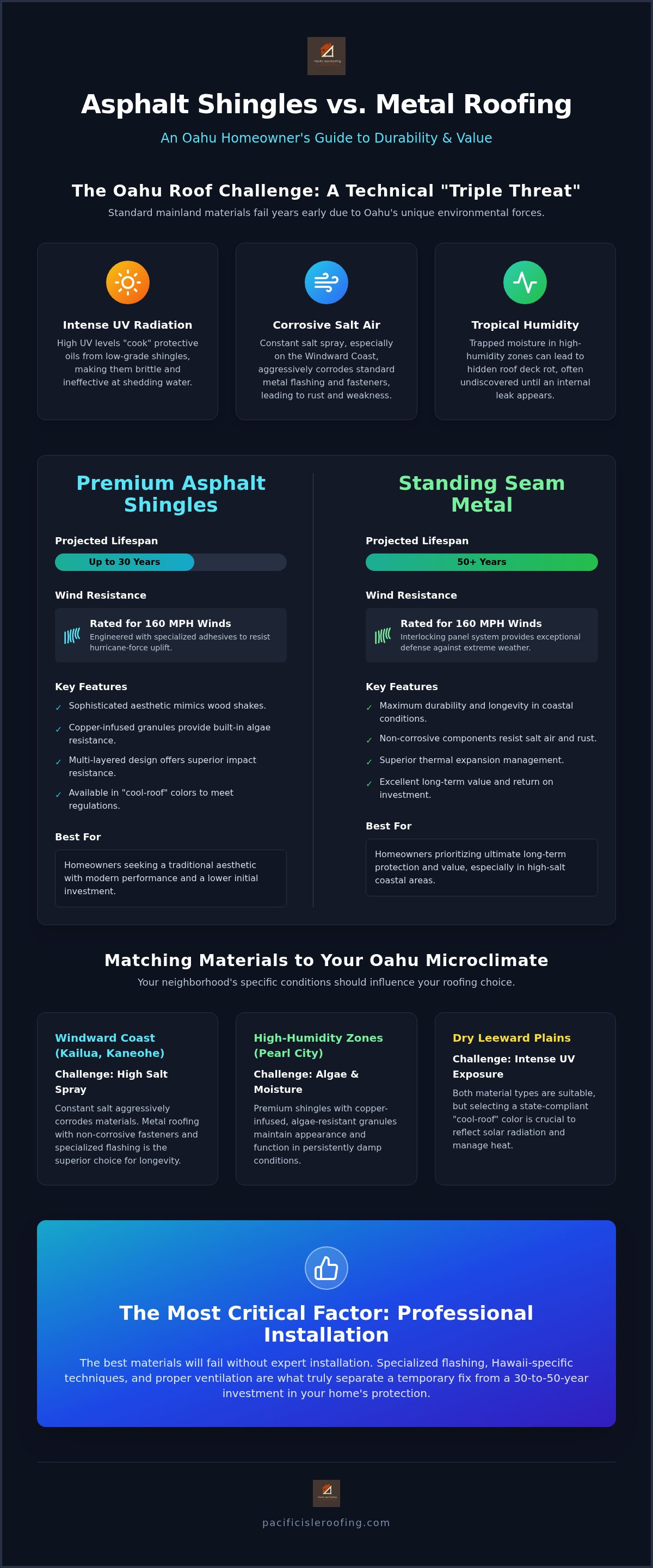
Designing a roof for an island home isn't just about aesthetics; it's a matter of engineering for survival. In Honolulu County, residential roofs face a technical "Triple Threat" consisting of intense UV radiation, high humidity, and constant salt air saturation. These environmental forces cause standard mainland materials to fail years before their predicted lifespan. When we evaluate asphalt shingles vs metal roofing Oahu, we aren't just comparing colors or textures. We are looking for a high-performance system that can withstand Category 5 hurricane-force winds up to 160 mph while managing the constant cycle of thermal expansion. Each day, the tropical sun heats your roof to extreme temperatures, causing materials to expand and contract. Without specialized installation techniques, this movement can pull fasteners loose and create entry points for water.
Salt Air: The Silent Killer of Residential Roofs
Proximity to the ocean dictates the pace of your roof's deterioration. Homes in coastal areas like Kailua and Kaneohe experience constant salt spray, which is far more aggressive than the air in inland Mililani. This salt creates a destructive chemical reaction with standard galvanized steel flashing, leading to rapid rust and structural weakness. Because of this, Pacific Isle Roofing prioritizes non-corrosive components for every Oahu install. We've spent over 20 years observing how different materials react to the trade winds. Our team ensures that every fastener and transition piece is built to resist the salt-heavy air that characterizes our island life, maintaining the integrity of your home's seal for decades.
UV Degradation and Tropical Humidity
The 2026 UV levels are high enough to literally "cook" the protective oils out of low-grade Asphalt Shingles. Once these essential oils evaporate, the shingles become brittle and lose their ability to shed water effectively. In high-humidity zones like Wahiawa, this moisture often gets trapped against the roof deck, leading to hidden rot that homeowners don't see until a leak appears inside the living space. A Hawaii-Ready roof is a system that carefully balances continuous ridge ventilation with advanced moisture protection to keep the underlying structure dry and cool. This technical balance is what separates a long-term investment from a temporary fix, ensuring your home remains a safe haven regardless of the weather outside.
Premium Asphalt Shingles: The Modern Evolution for Island Homes
Many homeowners view asphalt as merely a budget-friendly compromise; however, modern heavyweight designer shingles represent a significant evolution in residential protection. These aren't the thin, flat materials of the past. Today's premium options are engineered to meet the stringent 2026 Hawaii building codes, which require systems to withstand wind speeds of up to 160 mph. When homeowners spend time evaluating asphalt shingles vs metal roofing Oahu, they often find that high-performance shingles offer a sophisticated aesthetic that complements traditional Honolulu architecture, from historic cottages to modern hillside estates.
In neighborhoods like Pearl City, the high humidity often leads to unsightly black streaks caused by cyanobacteria. Premium shingles now feature advanced copper-infused granules that act as a built-in algae defense. This technology ensures your roof remains clean and maintains its curb appeal without the need for aggressive pressure washing. Additionally, specialized wind-rated adhesive strips are factory-applied to each shingle. These strips create a continuous bond that resists the relentless uplift of seasonal trade winds, providing a level of security that was previously unavailable in traditional composition roofs.
The Benefits of Multi-Layered Shingles
Triple-laminate shingles provide a thick, shadowed profile that mimics the look of hand-split wood shakes. This aesthetic depth comes without the extreme fire risk or maintenance headaches associated with natural wood. Beyond beauty, these multiple layers of fiberglass and asphalt offer superior impact resistance. During tropical storms, flying debris is a common threat; a thicker shingle provides a more robust sacrificial layer that protects the underlying roof deck. To comply with the white roof regulations effective since January 2025, we recommend specific cool-roof colors. These granules are designed to reflect solar energy, helping you maintain lower internal home temperatures and reduce monthly cooling costs.
Cost-Effectiveness vs. Longevity
When comparing roofing materials, the lower initial investment of asphalt is often its strongest selling point. While manufacturers may offer long-term warranties, the realistic lifespan for an architectural shingle roof on Oahu is typically 15 to 20 years due to our intense UV exposure. This makes proactive care essential. Regular Roofing Inspections are the most effective way to identify small issues before they compromise the entire system. If you want to ensure your investment lasts as long as possible, a quick professional check can catch minor UV damage or loose fasteners early. For a thorough evaluation of your current system, consider scheduling one of our comprehensive Roofing Inspections to stay ahead of the island weather.
Metal Roofing: Maximum Durability in Coastal Oahu Conditions
Standing seam metal roofing is widely considered the gold standard for homeowners who prioritize absolute wind resistance and efficient water shedding. While we discussed the evolution of high-performance shingles previously, the debate of asphalt shingles vs metal roofing Oahu often shifts toward metal when longevity is the primary concern. In newer developments across Kapolei and Ewa Beach, metal is becoming a standard choice for its sleek, contemporary appearance and superior thermal properties. Unlike asphalt, which absorbs solar energy, metal reflects a significant portion of radiant heat. This keeps your attic significantly cooler and directly supports the state’s 2025 "white roof" energy requirements by reducing the load on your air conditioning system.
Corrosion Resistance and Material Grade
The biggest risk with metal on an island is choosing the wrong material for your specific zip code. While galvanized steel is common on the mainland, it often fails prematurely in our salt-saturated air. For homes within a mile of the coast, aluminum is the preferred high-performance choice because it naturally resists rust. To maintain the roof's appearance under the punishing Hawaii sun, we utilize PVDF coatings, often known as Kynar 500. These finishes provide industry-leading color retention and prevent the chalking that occurs with cheaper paints. We also consider stainless steel fasteners to be non-negotiable; using standard screws can lead to "bleeding" and structural failure at the attachment points. When properly installed, an aluminum system provides a lifespan of 50+ years, more than doubling the realistic service life of even the best shingles.
The Investment Reality of Metal
Choosing metal requires a higher upfront investment, but it's best viewed as a long-term property value play rather than a simple repair cost. It's the last roof most homeowners will ever need to install. A common concern we hear is about noise during our heavy tropical downpours. It's a myth that modern metal roofs are loud; because we install them over solid wood decking with high-quality underlayment, the sound is comparable to any other roofing material. Our team focuses exclusively on residential-grade metal that matches the aesthetic of local neighborhoods. This ensures your home looks like a residence, not a warehouse, while benefiting from the highest levels of protection available. If you're unsure about the current state of your structure, our team provides detailed Roofing Inspections to determine if your home is a good candidate for a metal upgrade.
Oahu Selection Guide: Matching Materials to Your Neighborhood
Oahu is a diverse landscape of microclimates, where the weather in your backyard can differ drastically from a neighborhood just five miles away. Because our island's geography creates distinct environmental zones, your choice in the asphalt shingles vs metal roofing Oahu debate should be dictated by your specific zip code. A roof that performs well in the dry heat of the west side may struggle against the constant moisture and salt spray of the windward coast. Understanding these local nuances is essential for ensuring your investment lasts its full intended lifespan while maintaining the structural integrity of your home.
Kaneohe and Kailua: The Coastal Defense
Homes situated within 3,000 feet of the ocean face the most aggressive conditions on the island. In Kaneohe and Kailua, persistent trade winds drive salt into every roof crevice, accelerating the corrosion of any exposed metal components and degrading standard materials. For these coastal residents, we strongly recommend aluminum roofing or premium asphalt systems equipped with specialized warranty riders specifically for salt air environments. It's a common oversight, but many standard manufacturer warranties have exclusions for coastal salt exposure. Aluminum is particularly effective here because it doesn't rust, providing a level of security that steel simply cannot match in a maritime environment.
Ewa Beach and Kapolei: The Sun Shield
On the Leeward side, the primary enemy is not salt, but the relentless tropical sun. In Ewa Beach and Kapolei, temperatures often soar, making "Cool Roof" certified materials a technical necessity. If you're planning a new Roof Installation Oahu, selecting materials with high UV-reflectivity is the most effective way to manage internal home temperatures. Premium shingles now feature UV-reflective granules that bounce solar energy back into the atmosphere, which can lead to significant savings on your monthly electricity costs. This heat reduction keeps your family more comfortable and prevents the roofing materials from becoming brittle and failing prematurely under the 2026 UV levels.
Central Oahu neighborhoods like Mililani and Wahiawa present a third challenge: high humidity and frequent cloud cover. These conditions are ideal for the growth of moss and algae, which can trap moisture against your roof deck and cause hidden rot. For these areas, we prioritize shingles with copper-infused granules or metal systems with smooth finishes that shed organic debris easily. By matching your material choice to your specific neighborhood, you ensure your home remains protected against the unique technical challenges of its environment. If you're ready to secure your home with a system tailored to your local climate, our team is available for professional Roof Replacement Services designed for island life.
The Pacific Isle Approach: Why Installation Trumps Material
While the debate of asphalt shingles vs metal roofing Oahu often focuses on the materials themselves, the technical reality is that a roof's success depends almost entirely on the quality of the installation. A "lifetime" material is only as durable as the flashing and fasteners holding it together. At Pacific Isle Roofing, we've spent more than 20 years specializing exclusively in residential homes on this island. We understand that mainland techniques often fall short in our tropical environment. This is why we treat every project as a complete system, starting with a clean slate by never roofing over old shingles. Removing the previous layers is the only way to inspect the underlying deck for the structural rot we discussed in earlier sections, ensuring your home meets or exceeds the 2026 Hawaii residential roofing standards.
Craftsmanship Over Speed
We prioritize methodical precision over rapid completion. In our high-wind zones, we utilize hand-nailing to ensure perfect placement and depth for every fastener. This prevents the common issue of high-pressure nail guns over-driving fasteners through the shingle, which can lead to blow-offs during a tropical storm. We also replace standard organic felt with high-temp synthetic underlayments. These advanced membranes provide a secondary water barrier that won't degrade under the intense heat of an Oahu attic. Without proper ventilation, your new roof can literally "cook" from the inside out. We design each system to facilitate continuous airflow, protecting the asphalt oils and preventing the wood deck from warping over time.
Securing Your Oahu Investment
Protecting your property requires a disciplined process that values long-term security over temporary fixes. We follow a specific sequence to ensure every installation provides maximum value for the homeowner:
- Step 1: We conduct a professional roofing inspection to identify hidden structural rot or termite damage that must be addressed before the new roof is applied.
- Step 2: Our team provides a material consultation tailored to your neighborhood's specific salt-air exposure and microclimate.
- Step 3: The project is executed by our licensed local team (Hawaii license C-42-31088), ensuring all work complies with local building codes and manufacturer warranty requirements.
Protect your home today with a professional roof assessment from Pacific Isle Roofing. Our neighborly approach and deep historical knowledge of island weather ensure that whether you choose premium shingles or a standing seam metal system, your home remains a safe and stable haven for decades to come.
Securing Your Home’s Future in the Islands
Protecting your property from the relentless tropical sun and corrosive trade winds is a technical challenge that requires a specialized approach. As we've discussed, the long-term value of your investment depends on matching the right materials to your specific neighborhood microclimate. Navigating the choice between asphalt shingles vs metal roofing Oahu is about more than just aesthetics; it's about engineering a system that survives thirty to fifty years in our high-velocity hurricane zones.
At Pacific Isle Roofing, we combine our twenty years of local residential specialization with the precision required to meet 2026 building codes. Our team holds Hawaii license C-42-31088 and possesses expert knowledge of the salt-air challenges facing homes from Kailua to Kapolei. We prioritize your peace of mind by focusing on high-quality craftsmanship and clear, honest dialogue throughout the replacement process. We don't just install materials; we build systems designed to endure the unique rigors of island life.
Get Your Professional Oahu Roof Inspection from Pacific Isle Roofing. Taking this proactive step ensures your home remains a safe and stable sanctuary for your family, regardless of the weather conditions outside.
Frequently Asked Questions
Is a metal roof worth the extra cost for a home on Oahu?
Yes, a metal roof is widely considered a superior long-term investment due to its 50-year lifespan and exceptional resistance to hurricane-force winds. While the initial investment is higher than asphalt, the durability of aluminum or steel panels means you likely won't need another replacement in your lifetime. It also offers better thermal reflection, which is a significant advantage for managing home temperatures in our tropical climate.
How long do premium asphalt shingles actually last in Hawaii’s humidity?
Premium architectural shingles on Oahu typically have a realistic lifespan of 15 to 20 years. Although many products carry 30-year manufacturer warranties, the combination of intense UV radiation and high humidity in areas like Wahiawa causes the asphalt oils to dissipate faster than on the mainland. Regular maintenance and professional inspections are necessary to ensure the shingles remain pliable and waterproof throughout this period.
What is the best roofing material for a house in a salt air zone like Kailua?
Aluminum is the most reliable material for homes located within a mile of the ocean in Kailua or Kaneohe. Unlike standard galvanized steel, aluminum is naturally resistant to rust and salt-air corrosion. When evaluating asphalt shingles vs metal roofing Oahu for coastal properties, we recommend aluminum systems with PVDF coatings to ensure the roof maintains its structural integrity and color despite constant salt spray exposure.
Can a metal roof help lower my AC bill in Ewa Beach?
Yes, a metal roof can significantly reduce your cooling costs by reflecting radiant heat away from your home. In sun-drenched regions like Ewa Beach, traditional dark shingles absorb heat and transfer it into your attic and living spaces. Metal systems with high-reflectivity finishes keep the underlying structure much cooler. This reduces the load on your air conditioning system and helps you stay compliant with Hawaii’s 2025 "white roof" energy regulations.
Does Pacific Isle Roofing offer warranties for salt-air environments?
We specialize in installing systems that are specifically engineered to maintain their warranties in coastal environments. Many standard manufacturer warranties actually exclude damage caused by salt air exposure. We guide homeowners toward aluminum products and high-performance shingles that include specific salt-air riders. As a licensed contractor with over 20 years of local experience, we ensure every detail of the installation meets the manufacturer's strict requirements for coverage.
How do trade winds affect the choice between shingles and metal?
Our persistent trade winds require roofing systems that can withstand high uplift pressures and meet the 160 mph wind code. When comparing asphalt shingles vs metal roofing Oahu, both can be effective if installed with specialized techniques. We use hand-nailing for shingles to ensure perfect fastener depth and stainless steel clips for standing seam metal. These methods prevent the wind from getting underneath the materials and causing catastrophic failure during storm events.
Do I need to replace my roof deck when switching from shingles to metal?
You don't always need a full deck replacement, but the existing plywood must be in excellent structural condition. We never install a new metal roof over old shingles or compromised wood. During the tear-off process, we perform a detailed inspection of the decking. If we find any rot or termite damage, we replace those sections to ensure the new metal panels have a secure and level surface for attachment.
How often should I have my Oahu roof inspected to prevent leaks?
We recommend a professional roofing inspection at least once every two years to catch minor issues before they become major leaks. In our environment, UV degradation and organic growth can compromise seals and fasteners relatively quickly. Regular checks allow us to clear debris from valleys, inspect flashing around vents, and ensure your home's primary defense remains intact. This proactive approach is the most effective way to maximize the lifespan of your investment.


