

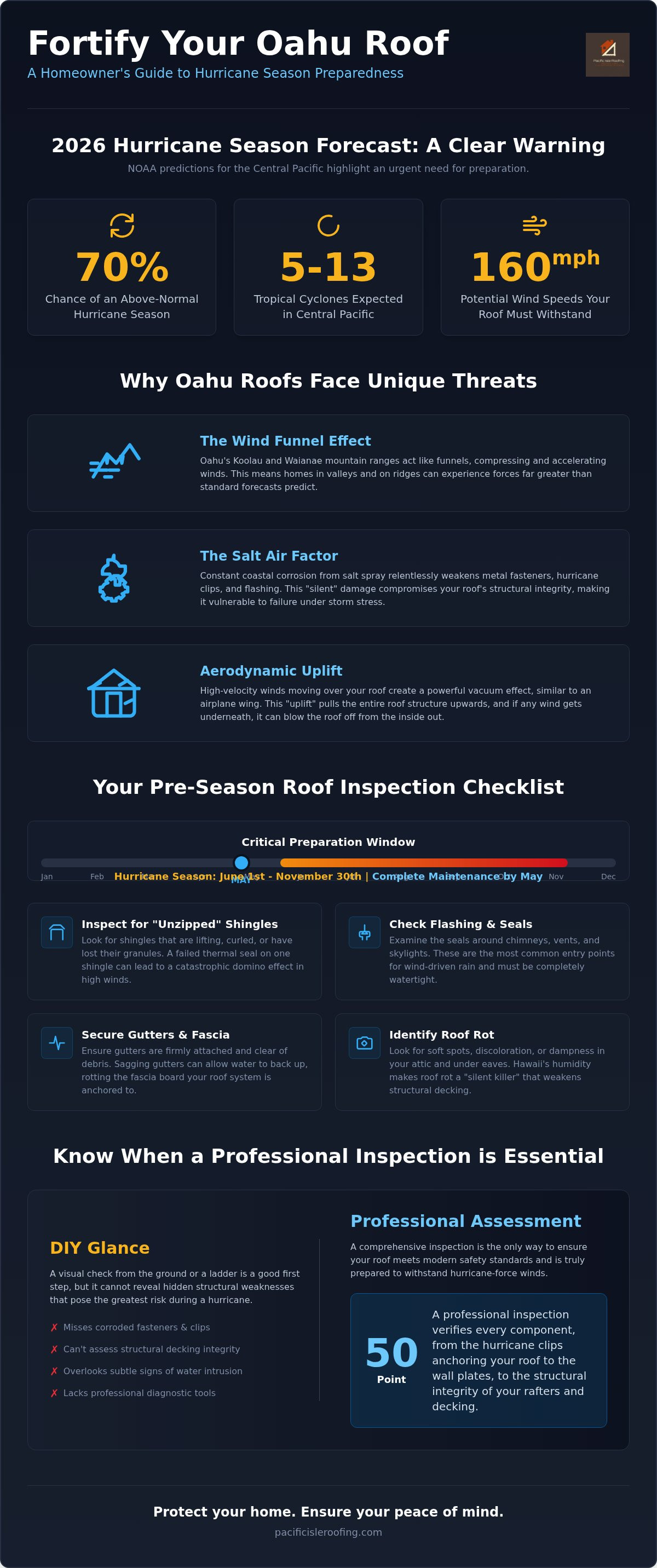
Did you know that NOAA's 2026 forecast predicts a 70% chance of an above-normal hurricane season, with five to thirteen tropical cyclones expected in the Central Pacific? For homeowners on the islands, this isn't just a statistic; it's a deadline for essential hurricane season roof preparation Oahu. You likely understand that your roof is the first line of defense against wind speeds reaching 160 mph, yet it's natural to feel unease when the skies darken. Whether you're worried about your hurricane clips or wondering if a small damp spot is a sign of structural failure, that uncertainty is heavy.
We believe peace of mind comes from professional preparation and high standards of craftsmanship. You deserve to know your home is a safe haven regardless of what the 2026 season brings. This guide reveals the exact steps to fortify your roof against tropical forces and ensure its long-term durability. We'll walk through a clear pre-season checklist, explain how to identify hidden vulnerabilities, and help you decide when a task requires a seasoned professional's touch. By the end, you'll have a practical roadmap to protect your family and preserve your home's integrity.
Key Takeaways
- Understand how Oahu’s unique mountain ranges intensify wind speeds and why completing your proactive maintenance by the May deadline is vital for home safety.
- Master the specific steps for hurricane season roof preparation Oahu, including how to identify "unzipped" shingles that have lost their thermal seal.
- Discover the essential role of hurricane clips and how salt air corrosion on fasteners can compromise your roof's connection to your home’s wall plates.
- Learn to spot the signs of roof rot, a "silent killer" driven by Hawaii’s high humidity that weakens structural decking and rafters.
- Recognize when a DIY glance is insufficient and why a comprehensive 50-point professional inspection is necessary to ensure your roof meets modern safety standards.
Why Hurricane Season on Oahu Demands a Specialized Roof Strategy
Oahu’s topography creates a high-stakes environment for residential structures. Unlike the flat plains of the mainland, our island is defined by the Koolau and Waianae mountain ranges. These peaks don't just provide a beautiful backdrop; they act as massive funnels that accelerate wind speeds as they pass through valleys and over ridges. This geographic reality is a primary reason why hurricane season roof preparation Oahu requires a localized approach. When winds hit these ridges, they compress and speed up, hitting homes with far more force than a standard weather report might suggest.
The official season runs from June 1 through November 30, making May the critical window for proactive maintenance. During this time, homeowners must address the physics of "uplift." When high winds hit a home, they create a vacuum effect on the leeward side of the roof, literally pulling the structure upward. By understanding tropical cyclones and the immense pressure they exert, it becomes clear that a roof isn't just sitting on a house; it must be securely anchored to it. If the wind manages to get under the eaves or through a broken seal, the resulting internal pressure can lift the entire roof deck off the rafters.
We also face the "Salt Air Factor." Coastal corrosion is a persistent threat that quietly weakens fasteners and hurricane clips over years of exposure. In Hawaii's humid environment, salt crystals settle into the metal components of your roofing system, leading to rust that eats away at structural integrity. When a storm finally arrives, these compromised components can fail under stress, leading to catastrophic roof loss even in lower-category storms.
Oahu Climate Zones and Your Roof Risk
Your specific neighborhood dictates your risk level. Windward homes in areas like Kaneohe or Kailua face constant salt spray and heavy trade winds that test shingle adhesion daily. Conversely, Leeward homes in Kapolei or Ewa Beach deal with intense UV radiation that can bake shingles, making them brittle and prone to cracking. High tropical humidity also interferes with the thermal seal of asphalt shingles, preventing them from bonding correctly. Standard mainland roofing techniques often fail here because they don't account for this relentless moisture and salt.
The Financial Stakes of Unpreparedness
Hawaii insurance policies often include specific hurricane deductibles that are significantly higher than standard claims. These are often calculated as a percentage of the home's value rather than a flat dollar amount. A minor leak can quickly escalate into a total loss if wind enters the home, causing internal pressure to blow the roof off from the inside out. The return on investment for a professional inspection is clear; identifying a loose flashing or a rusted clip now is far more affordable than facing an emergency replacement in the middle of a disaster.
Step-by-Step: Conducting a Pre-Season Roof Inspection for Storm Readiness
Effective hurricane season roof preparation Oahu begins with a methodical evaluation of your home’s exterior. While many homeowners focus on clearing debris from gutters, a true storm-readiness inspection requires a deeper look at the components that resist high-velocity wind. Safety remains the highest priority during this process. If your roof has a steep pitch, or if you're uncomfortable with heights, perform your inspection from a sturdy extension ladder rather than walking the surface. For those following a broader hurricane preparedness guide, remember that your roof is the most vulnerable part of your home’s structural envelope.
One of the most critical issues to identify is the "unzipping" of shingles. This occurs when the thermal seal between shingle layers fails, allowing wind to catch the edge and peel it back like a zipper. Once one shingle lifts, the wind creates a domino effect across the entire roof plane. Additionally, ensure your gutter-to-fascia connections are secure. If gutters are sagging or pulling away, water can back up into the soffits during heavy tropical downpours, leading to rot in the very wood that anchors your roof system. Don't overlook the "weakest links" such as flashing around chimneys, plumbing vents, and skylight seals, as these are the primary entry points for pressurized wind and rain.
Step 1: The Perimeter Patrol
Begin your inspection at the eaves. Look closely at the drip edges for signs of heavy corrosion or loose fastening; these metal strips prevent wind from getting under your shingles. Next, head into your attic during the day with the lights off. If you see "daylight" peeking through the eaves or ridge, you have a structural gap that wind will exploit. Finally, look up at the surrounding landscape. Overhanging kukui or mango tree limbs can act as battering rams in high winds, so ensure they're trimmed back at least ten feet from your roofline to prevent impact damage.
Step 2: Surface Integrity Check
Examine the shingles for "bald" spots where the protective mineral granules have washed away. Without these granules, the underlying asphalt is exposed to harsh UV rays, causing it to become brittle. Watch for curled or fish-mouthed edges that provide an easy grip for the wind. Shingle lift is the primary precursor to storm failure, occurring when the adhesive bond breaks and allows the shingle to flutter during high-pressure events. If you notice widespread granule loss or lifting, it may be time to consult with an expert for professional roofing inspections to determine if your home is truly storm-ready.
While new shingles provide a beautiful exterior, they only work if the structure beneath them remains grounded. True hurricane season roof preparation Oahu involves verifying that your roof is physically tied to your home's frame. FEMA provides a comprehensive guide on how to prepare your home for a hurricane, emphasizing that structural reinforcement is the most effective way to prevent catastrophic loss. This concept is known as the "continuous load path," ensuring that wind forces are transferred from the roof through the walls and down to the foundation. Salt air is the primary driver of fastener fatigue on the island. Over time, the saline mist penetrates the roofing system, causing nails and screws to corrode and lose their "bite" in the wood. This weakening often goes unnoticed until a storm applies significant uplift pressure. Additionally, you must seal the building envelope. If your soffit vents are loose or poorly installed, wind can rush into the attic space. This creates internal pressure that pushes the roof deck upward from the inside while the storm pulls it from the outside.Inspecting Your Hurricane Clips
Hurricane clips are the galvanized steel connectors that bridge the gap between your rafters and the wall plates. You can usually find them by looking into the eaves from the outside or by inspecting the attic space. Look for signs of "pitting" or deep rust that looks like flaking red scales. In older Oahu neighborhoods such as Pearl City or Aina Haina, many homes were built before modern wind-code requirements. If your home was constructed several decades ago, it likely needs a retrofit to meet current safety standards and provide the necessary grip during a storm.
The Importance of Proper Nailing Patterns
The way a shingle is nailed determines its wind rating. While mainland installations might get by with four nails per shingle, Hawaii’s high-wind zones often require a 6-nail pattern to ensure maximum resistance. A common installation error called "high-nailing" occurs when fasteners are placed too high on the shingle, missing the reinforced nail zone. This mistake makes the shingle far more likely to blow off during a cyclone. Finally, ensure your ridge vents are securely fastened with heavy-duty screws to prevent them from becoming airborne debris.
Identifying Roof Rot and Vulnerabilities: The Hidden Threats to Your Home
Roof rot is the biological breakdown of your home's structural components, specifically the plywood decking and rafters. While previous sections focused on mechanical failures like "unzipping" shingles, rot represents an internal vulnerability that often goes undetected until a storm hits. For effective hurricane season roof preparation Oahu, identifying these weakened areas is paramount. Hawaii's relentless humidity and tropical heat create a greenhouse effect in your attic; this provides the perfect environment for wood-decaying fungi to flourish. This "silent killer" of roofs can compromise your home's safety long before the first clouds of a cyclone appear on the horizon.
You can identify these hidden threats by performing a "Soft Spot" test. When walking on the roof, pay close attention to any areas that feel springy or give under your weight. This sponginess indicates that the plywood has lost its structural integrity and can no longer hold fasteners securely. Inside the attic, use a high-powered flashlight to look for mold or mildew patterns on the underside of the roof deck. Even if you don't see an active drip, these fungal colonies signal a slow moisture intrusion that is quietly eating away at your home's primary defense system.
Common Causes of Roof Rot in Oahu Homes
Poor attic ventilation is a leading cause of rot on the island. When tropical heat is trapped against the roof deck, it causes condensation to form, which eventually soaks into the wood. For coastal properties in Waimanalo or Ewa, persistent salt spray adds another layer of complexity by attracting moisture and accelerating the degradation of both metal flashing and wood fibers. High-wind events exploit these weaknesses; rot reduces a roof’s wind-load capacity by up to 50%. This means a roof that looks pristine from the street could fail during a tropical storm because the wood beneath the shingles is too weak to resist uplift forces.
Signs You Already Have a Rot Problem
- Interior Staining: Look for dark, tea-colored stains on your ceiling or bubbling paint along the top of your walls.
- Structural Sponginess: Note any distinct lack of firmness when pressure is applied to the roof surface during maintenance.
- Atmospheric Odors: Pay attention to persistent musty or earthy smells in the crawl space or attic areas that don't dissipate with airflow.
If you suspect your home has hidden vulnerabilities, don't wait for a storm to confirm your fears. Schedule a professional evaluation for roof leak repairs to ensure your structural decking is sound before the winds pick up.
Professional Support: When to Call an Oahu Roofing Specialist
While a visual check from your ladder provides a basic starting point, it cannot replace the technical depth of a comprehensive professional assessment. For effective hurricane season roof preparation Oahu, a 50-point inspection identifies the minute structural vulnerabilities that usually escape the untrained eye. These are the differences between a roof that holds and one that fails when the barometric pressure drops. Choosing a contractor with a valid Hawaii license, such as C-42-31088, ensures that your home is being handled by a professional who adheres to strict safety standards and understands the specific building codes required for our island’s wind zones.
Using unlicensed handymen for storm preparation introduces unnecessary risk. These individuals often lack the specialized equipment, insurance coverage, and local accountability required for high-stakes roofing work. At Pacific Isle Roofing, we bring over 20 years of local history to every job, acting as a stable pillar in the community. We understand that not every vulnerability requires a full replacement. Our mission is to provide honest, tactical Roof Leak Repairs when possible, or full Roof Replacement Services when the structural integrity of the home is at stake. We help you prepare for the "Big One" by prioritizing high-quality craftsmanship and premium materials that stand the test of time.
What to Expect in a Pacific Isle Roofing Inspection
Our process is methodical and thorough. We utilize advanced drone mapping and thermal imaging to detect hidden moisture pockets that haven't yet manifested as interior leaks. This technology allows us to see the "invisible" damage caused by Hawaii’s humidity and salt air. Following the inspection, you receive a detailed report that serves as vital documentation for insurance purposes. Every home on Oahu exists in a unique micro-climate; a house in the misty valleys of Manoa requires a different strategy than a sun-baked property in Ewa Beach. We customize every repair plan to match these specific environmental stressors and ensure maximum durability.
Booking Your Pre-Season Checkup
The "May Rush" is a reality on the island as the June 1st hurricane season start date approaches. Beating this rush ensures you have ample time to complete any necessary repairs or Roofing Inspections before the weather turns. There is a profound sense of peace that comes from knowing your roof is certified as storm-ready by a seasoned veteran. It’s an investment in your family’s safety and your property’s longevity. We invite you to begin a dialogue with us to ensure your home remains a secure sanctuary all year long.
Ensure your home is storm-ready. Schedule your Oahu roof inspection today.
Securing Your Home’s Future Before the Storm Arrives
Protecting your home on Oahu requires more than a simple glance at your shingles. It demands a thorough understanding of how local geography and tropical humidity interact to challenge your roof’s integrity. By addressing structural reinforcements like hurricane clips and identifying hidden rot early, you ensure your family remains safe throughout the 2026 season. Proactive hurricane season roof preparation Oahu is a vital commitment to longevity and peace of mind. It’s about more than just maintenance; it’s about ensuring your home’s primary defense system is ready for the unique pressures of our island climate.
With over 20 years of local roofing experience and specialized knowledge in high-wind residential solutions, we're here to act as your protective guide. Our team holds Hawaii license C-42-31088 and maintains a steadfast dedication to the highest standards of craftsmanship. We prioritize your well-being by focusing on the quiet authority of a job done right rather than flashy marketing. Don't leave your home’s safety to chance when the winds begin to accelerate through our island's valleys.
Get Your Professional Hurricane Readiness Inspection today and move into the season with professional confidence. You’ve worked hard to build your sanctuary; let’s work together to ensure it remains a safe haven for years to come.
Frequently Asked Questions
When does hurricane season start in Hawaii 2026?
The 2026 Central Pacific hurricane season officially begins on June 1 and concludes on November 30. Proactive homeowners should aim to complete their necessary maintenance and repairs by the end of May to avoid the seasonal rush. This timeline aligns with NOAA’s forecasts and provides a critical window for securing your home’s exterior before the first tropical cyclones develop. Proper planning ensures you aren't scrambling for a contractor when the skies begin to darken.
How do I know if my roof has hurricane clips?
You can verify the presence of hurricane clips by inspecting your attic space or looking closely under the eaves where the rafters meet the wall plates. These galvanized steel connectors bridge the gap between the roof structure and the home’s frame, providing essential uplift resistance. If your home was built before the mid-1990s, it’s advisable to have a professional confirm if retrofitting is required to meet current Hawaii building codes and safety standards for storm protection.
Can a roof leak cause it to blow off during a hurricane?
Yes, a persistent leak can lead to internal structural decay that significantly compromises your roof's resistance to uplift forces. When water infiltrates the decking, it causes rot that prevents fasteners from maintaining a secure grip. This hidden vulnerability often results in catastrophic failure when high-velocity winds create a vacuum effect over the weakened area. Addressing moisture intrusion early is a fundamental step in protecting your home from the destructive pressures of a major storm.
What is the best roofing material for high winds in Oahu?
Standing seam metal roofing is often considered the most durable option for Oahu’s high-wind zones due to its integrated fastening system. However, premium architectural shingles with high-wind ratings are also excellent choices when installed with a 6-nail pattern rather than the standard four. The selection often depends on your neighborhood’s specific micro-climate and your home's architectural requirements. Choosing materials specifically rated for Category 5 wind speeds provides the highest level of long-term security for your family.
How much does a professional roof inspection cost in Honolulu?
The cost for a professional evaluation varies based on the size of the home, the pitch of the roof, and the complexity of the roofing system. While some homeowners look for general estimates, a comprehensive assessment provides a detailed report of structural health and necessary insurance documentation. It’s best to consult directly with a licensed specialist to receive an accurate quote tailored to your property’s needs. Investing in an expert evaluation now can prevent much more expensive emergency repairs later.
Should I tarp my roof before a hurricane hits?
Tarping is a reactive measure typically reserved for existing damage; it isn't a substitute for proper hurricane season roof preparation Oahu. If you must use a tarp, it needs to be professionally secured to prevent the wind from catching the edges and causing further uplift. Attempting to install a tarp as a storm approaches is dangerous and often ineffective against hurricane-force winds. Focus on permanent structural reinforcements and sealing your building envelope well before any weather warnings are issued.
Does Hawaii home insurance cover roof damage from hurricanes?
Standard homeowner's insurance in Hawaii typically does not cover damage caused specifically by hurricanes or floods. Most residents are required by mortgage lenders to maintain a separate hurricane insurance policy to protect their investment. It's important to review your specific deductible, as hurricane-related claims are often calculated as a percentage of the home's total value rather than a flat fee. Understanding these policy nuances is a critical part of your overall financial readiness for the season.
How often should I have my roof inspected on Oahu?
We recommend a professional inspection at least once a year, ideally during the spring months. This regular evaluation is a core part of hurricane season roof preparation Oahu because salt air and high humidity constantly degrade roofing components. Catching minor issues like rusted fasteners, loose flashing, or small leaks early prevents them from escalating into major structural failures during a tropical cyclone. Regular maintenance by a seasoned veteran ensures your home remains a reliable sanctuary throughout the year.


