Imagine waking up at 2:00 AM to the rhythmic drumming of a tropical downpour against your ceiling, only to realize the sound has shifted from a soothing patter to a steady drip inside your bedroom. For many homeowners across the island, this isn't just a bad dream; it's a recurring reality that leads to costly repairs and persistent mold growth. Finding the best roofing materials for heavy rain Oahu requires more than just picking a common shingle. It demands a specialized system built to withstand 140 mph winds and the relentless salt air that defines our unique microclimates.
You deserve to feel completely secure inside your home, regardless of how intense the Kona storms become or how high the humidity climbs. We understand that a roof is your first line of defense, and its failure can feel like a breach of your family's safety. This 2026 guide will help you identify the materials that stay leak-free for decades while resisting the rust and algae that claim so many local roofs prematurely.
We'll examine the superior durability of standing seam metal, the protective benefits of sealed roof decks, and the latest building code requirements for wind resistance. By the end of this article, you'll have the professional knowledge needed to choose a roofing solution that offers both peace of mind and lasting curb value.
Key Takeaways
- Learn why standing seam metal and concrete tiles are the best roofing materials for heavy rain Oahu homeowners can select for maximum storm protection.
- Understand the critical role of synthetic underlayment and precision flashing in creating a truly waterproof barrier against tropical downpours.
- Discover how modern materials withstand the unique combination of high-velocity trade winds and corrosive salt air found across the island.
- Compare the long-term lifespans of top-tier roofing options to ensure your home remains dry and maintenance-free for decades to come.
- Recognize the importance of a professional, local inspection to tailor your material choice to the specific rainfall levels of your neighborhood.
Understanding Oahu’s Heavy Rain Challenges: More Than Just Water
Tropical rainfall on Oahu is fundamentally different from the steady drizzles found in many mainland states. Our storms often arrive with sudden, overwhelming intensity, dropping several inches of water in a matter of hours. This volume alone tests the limits of any drainage system, but the real challenge lies in the physics of the storm. When you are evaluating the best roofing materials for heavy rain Oahu weather patterns require, you have to look beyond simple water resistance. You must consider how a material performs when that water is being driven by powerful trade winds.
In Hawaii, rain rarely falls straight down. Constant trade winds can push water horizontally or even upward, forcing moisture into tiny gaps under shingles or tiles that would remain dry in a calmer climate. This "wind-driven rain" is responsible for many of the mysterious leaks homeowners discover during the winter months. Because our island is a collection of distinct microclimates, a home in the lush, shaded valleys of Manoa faces entirely different moisture stresses than a property in the sun-drenched plains of Ewa Beach. Understanding these local nuances is the first step toward a long-term solution.
The Role of Humidity and Biological Growth
Persistent moisture is more than just a leak risk; it is a catalyst for biological decay. In Windward neighborhoods and deep valleys, high humidity levels mean roofs rarely have the opportunity to dry out completely between rain showers. This creates a perfect breeding ground for algae, moss, and lichen. These organisms do more than just stain your roof. They trap moisture against the surface and can eventually lead to "roof rot" in the underlying structure. Tropical foliage adds another layer of complexity. Large leaves and organic debris from overhanging trees trap water in valleys and gutters, making the installation of advanced waterproof membrane systems a necessity for total protection.
Salt Air Corrosion and Material Integrity
The "Salt Air Factor" is perhaps the most destructive force for Oahu homes near the coastline. Salt spray is highly corrosive and can travel miles inland on the breeze. It settles on your roof and begins a slow chemical reaction with any exposed metal. Standard galvanized fasteners and flashings that last for decades on the mainland often fail within five to ten years here. When these components corrode, they lose their structural integrity, allowing the next tropical storm to lift shingles or panels with ease. To maintain a truly secure home, we emphasize using the best roofing materials for heavy rain Oahu conditions, which often include stainless steel fasteners and specialized high-performance coatings that won't succumb to salt-induced rust.
Top 4 Waterproof Roofing Solutions for Oahu Homes
Selecting the right material for your home is a balance of aesthetics and precise engineering. In a climate where tropical storms are frequent, the best roofing materials for heavy rain Oahu homeowners can choose must prioritize long-term moisture exclusion and structural integrity. Each of the following solutions offers a specific set of benefits tailored to our island's unique environmental demands.
Standing Seam Metal: The Ultimate Rain Barrier
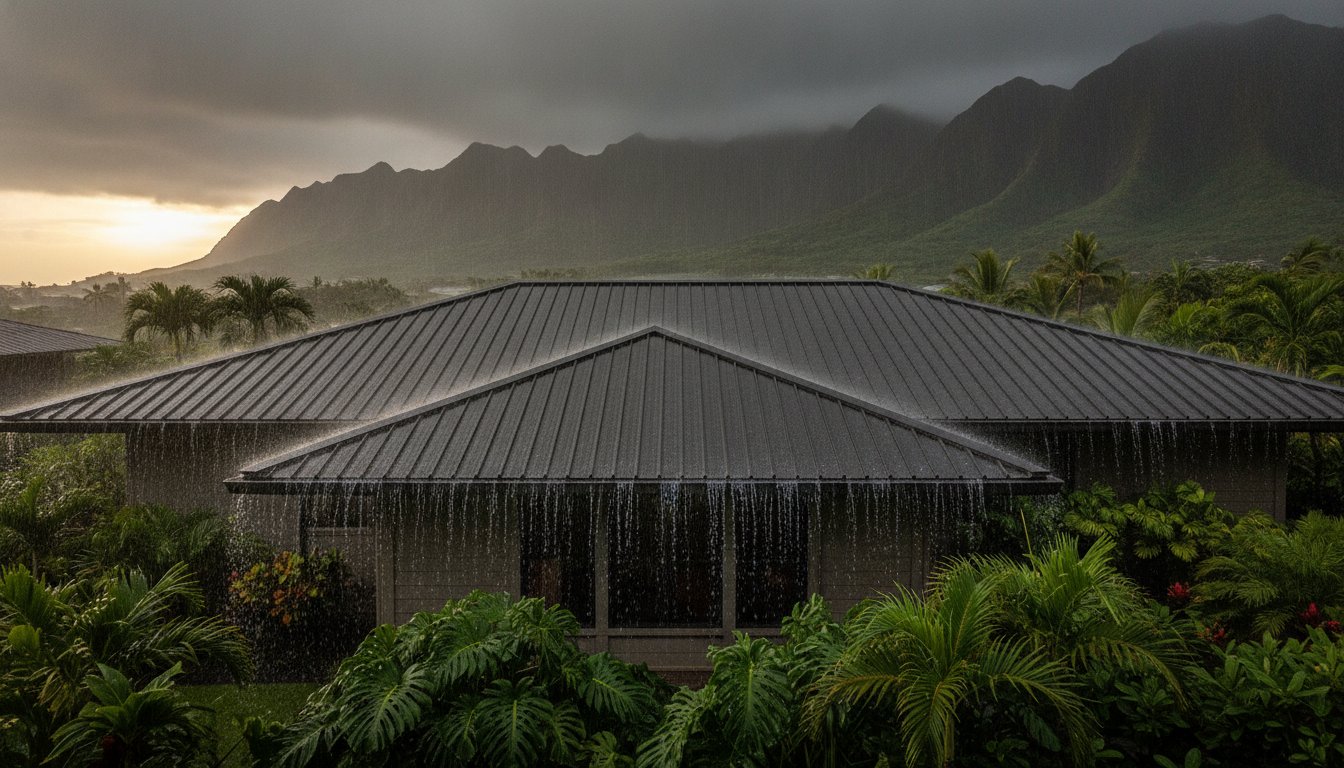
This system is widely considered the gold standard for island protection. Unlike traditional corrugated metal roofs that rely on exposed screws, standing seam systems utilize hidden fasteners. This design ensures there are no puncture points where water can seep in during high-wind events. For those living near the coast, we always recommend PVDF coatings, such as Kynar 500. This specialized finish provides the highest level of resistance against salt air corrosion and UV degradation. While some worry about noise, modern underlayment and attic insulation effectively dampen the sound of rain to a gentle, soothing hum.
Concrete Tiles: Traditional Durability for the Islands
Concrete and clay tiles offer exceptional performance in hurricane-force winds due to their significant weight and interlocking design. They feature natural drainage channels that move water away from the home's structure with high efficiency. Beyond waterproofing, their thermal mass provides a "Cool Roof" benefit; this keeps your interior temperatures stable during the humid breaks between rain showers. It's important to remember that these materials are heavy. Older Oahu homes may require a professional structural reinforcement before a roof replacement service can safely begin.
Premium Asphalt Shingles with Algae Resistance
For a cost-effective yet durable option, premium architectural shingles are a strong contender. However, standard shingles often fail on the wet Windward side due to persistent biological growth. We prioritize shingles manufactured with copper granules. These granules release ions that prevent the unsightly black streaks and moss common in humid valleys like Manoa or Nuuanu. To meet Hawaii building codes, these shingles must carry high-wind ratings of up to 130 mph to ensure they remain attached during intense seasonal storms.
Synthetic Roofing: Modern Resilience
Synthetic slate and shake materials are gaining popularity because they are completely impervious to rot, mold, and salt damage. These modern composites offer the classic look of natural materials without the vulnerability to moisture absorption. Because they are lightweight and exceptionally durable, they provide a versatile solution for homeowners who want the aesthetic of wood or stone with the waterproofing performance of a high-tech polymer.
Performance Comparison: Durability in Tropical Storm Conditions
Choosing the best roofing materials for heavy rain Oahu weather requires a side-by-side look at how these systems handle extreme atmospheric pressure. A roof that sheds water perfectly in a light drizzle may fail when 60 mph gusts push that water upward. We evaluate performance based on three primary island stressors: rain shedding, wind uplift, and salt resistance. While asphalt shingles offer a reliable 20 to 30 year lifespan in milder climates, Oahu’s high-rainfall environments often reduce that window. In contrast, standing seam metal and concrete tiles frequently provide 50 years or more of service when properly maintained.
UV exposure plays a critical role in this longevity. Between heavy rain events, the intense tropical sun beats down on your home. This heat causes materials to expand, while the sudden cooling of a rain shower causes them to contract. This "thermal shock" can make asphalt shingles brittle over time. Metal and tile systems handle these temperature swings with far more grace, maintaining their waterproof seal even after years of exposure. Regular maintenance, such as clearing organic debris and checking sealants, remains essential for all material types to prevent moisture from finding a way inside.
Wind Uplift and Rain Penetration
During a tropical storm, high winds rushing over your roof create pressure differentials. This Bernoulli effect can literally suck water into your attic through vents or under loose shingles. This is why "wind-driven rain" is such a significant concern in windward areas like Kaneohe. Standing seam metal is the top performer here because its interlocking panels leave no edges for the wind to catch. Heavy concrete tiles also excel; their sheer mass makes them difficult to dislodge even when wind speeds reach the 105 to 130 mph range required by current building codes. Regardless of the material, a Class A fire rating is a standard safety requirement that provides peace of mind during our drier summer months.
Microclimate Suitability: Which Material for Your Zip Code?
The geography of Oahu means your neighbor’s roof might not be the right choice for you. Selecting the best roofing materials for heavy rain Oahu homes often comes down to your specific zip code. If you live in the wet, shaded valleys of Manoa or Nuuanu, your primary enemy is biological growth. Copper-infused shingles or metal panels are ideal here to prevent moss from taking root. For coastal, salt-heavy areas like Ewa Beach or Kailua, aluminum or high-grade coated steel is a necessity to prevent rust. If your home sits on the windy ridges of Mililani or Hawaii Kai, prioritizing wind uplift ratings is the most important factor. Matching the material to your specific microclimate ensures your home stays dry for decades.

Key Installation Details That Prevent Roof Leaks
While selecting the best roofing materials for heavy rain Oahu weather is a vital first step, the longevity of your investment depends entirely on the quality of the installation. Even the most expensive standing seam metal or premium shingles will fail if the underlying components are neglected. A roof is a complex system of layers designed to manage water flow, air pressure, and thermal expansion. When these elements aren't integrated with precision, small vulnerabilities quickly turn into major leaks during a tropical downpour.
The Importance of High-Quality Underlayment
Traditional felt paper was once the island standard, but it often struggles in Hawaii's persistent 80% humidity. Synthetic underlayment has largely replaced felt because it's non-organic and won't rot or become brittle over time. Synthetic underlayment serves as the essential secondary waterproof barrier for Oahu homes, providing a final line of defense if the primary material is compromised. In high-risk areas like valleys and eaves, we utilize self-adhering membranes, often referred to as "Ice and Water Shield." These membranes create a watertight seal around fastener penetrations, ensuring that wind-driven rain cannot migrate into the roof deck. Additionally, breathable underlayments are essential in our climate to allow internal moisture to escape, preventing the "attic sweat" that leads to mold growth.
Proper Flashing for Chimneys and Valleys
Most residential roof leaks don't occur in the center of a shingle; they happen at the transitions. Flashing is the thin material, usually metal, installed to direct water away from critical areas such as chimneys, skylights, and where roof planes meet. In heavy rain areas, step flashing is non-negotiable for shingle roofs. This method involves overlapping individual pieces of metal with each layer of roofing to create a redundant drainage path. Because salt air can eat through standard galvanized steel in a matter of years, we prioritize non-corrosive metals like aluminum or stainless steel. A common mistake in local installations is the "closed valley" technique, where shingles are simply woven together. In high-rainfall neighborhoods, an "open valley" with a metal liner is far more effective at shedding the massive volume of water we see during Kona storms.
Proper ventilation and gutter integration complete the system. Without adequate airflow, heat builds up in the attic, causing shingles to bake from the inside out and accelerating the breakdown of sealants. Likewise, gutters must be sized correctly to handle tropical volumes, ensuring water is moved away from the roof edge rather than backing up under the eaves. To ensure your home is protected by a complete, high-performance system, consider scheduling a professional roofing inspection to identify potential weak points before the next storm season begins.
Choosing the Right Waterproof Solution with Pacific Isle Roofing
Deciding on the best roofing materials for heavy rain Oahu weather is a significant commitment that impacts your home's safety and value for decades. While technical specifications provide a foundation, the successful implementation of a waterproof system requires an intimate understanding of island geography. A roof in the salt-heavy air of Kailua requires different specifications than a home tucked into the rainy valleys of Nuuanu. At Pacific Isle Roofing, we function as your protective guide, translating complex building codes into a reliable shelter for your family.
Our process begins with a comprehensive residential assessment that goes beyond a surface-level estimate. We examine the specific microclimate of your neighborhood to determine which materials will offer the highest resistance to wind-driven rain and biological growth. As a fully licensed local contractor (C-42-31088), we ensure that every replacement meets the stringent requirements of the current Hawaii building codes, including the wind load provisions of ASCE 7-16. This professional oversight is essential for maintaining your material warranties and ensuring the long-term integrity of your investment.
Our Local Expertise in Leak Prevention
With over 20 years of history serving Oahu homeowners, we have developed a specialized focus on residential leak detection and replacement. We prioritize high-quality craftsmanship over high-volume commercial projects, allowing us to dedicate the necessary time to every detail of your installation. Our team manages the entire permitting process with the Honolulu Department of Planning and Permitting (DPP), ensuring your project is compliant and documented. This neighborly dedication to service means we stand by our work long after the final shingle or metal panel is secured, providing you with the peace of mind that only a seasoned island veteran can offer.
Protect Your Investment Today
It is always more cost-effective to address roofing needs before a major tropical storm exposes a vulnerability. Waiting for a visible leak often means that moisture has already begun to compromise your roof deck or attic insulation. By choosing the best roofing materials for heavy rain Oahu conditions now, you prevent the secondary damage caused by mold, rot, and salt-air corrosion. We invite you to engage in an open dialogue with our team to discover how a tailored roofing system can enhance your home's curb appeal while providing a steadfast barrier against the elements.
Taking the first step toward a leak-free home is straightforward and professional. Schedule your professional Oahu roof inspection with Pacific Isle Roofing today to receive a detailed assessment of your home's current condition and a clear path toward long-term security.
Securing Your Home Against the Next Tropical Storm
Protecting your property from Oahu's intense weather requires a strategic approach that combines high-performance materials with expert installation. We have explored how standing seam metal and concrete tiles stand as the best roofing materials for heavy rain Oahu homeowners can invest in, provided they are matched to your specific microclimate. A truly waterproof home depends on these critical details, from synthetic underlayments to non-corrosive flashing that resists the relentless salt air found in our coastal neighborhoods.
With over 20 years of local Oahu experience, Pacific Isle Roofing understands the high stakes of residential protection. We are a fully licensed Hawaii contractor (C-42-31088) specialized in residential leak repairs and comprehensive replacements. Our mission is to ensure your roof remains a steadfast barrier against every tropical downpour and trade wind gust. We prioritize your family's safety and your home's long-term value in every project we undertake.
Don't wait for a leak to compromise your peace of mind. Get a Professional Roof Inspection for Your Oahu Home today to ensure your property is prepared for the seasons ahead. We look forward to providing the reliable protection and professional guidance your home deserves.
Frequently Asked Questions
What is the best roofing material for high-wind areas in Oahu?
Standing seam metal is the premier choice for high-wind zones across the island. Its interlocking panels and hidden fasteners leave no exposed edges for the wind to catch. Heavy concrete tiles also perform exceptionally well due to their significant weight, which naturally resists uplift during tropical storms. Both materials meet the stringent wind speed requirements of 105 to 130 mph mandated by our local building codes.
How often should I have my roof inspected in a rainy area like Kaneohe?
You should schedule a professional inspection at least once a year, ideally before the winter rainy season begins. In high-rainfall areas like Kaneohe, more frequent checks are beneficial to ensure gutters and valleys are clear of tropical debris. This proactive approach allows a professional to identify small vulnerabilities or seal failures before they turn into costly interior leaks during a heavy downpour.
Are metal roofs more prone to salt air corrosion than shingles?
Metal roofs are only vulnerable to corrosion if the wrong material or coating is selected for your specific neighborhood. While standard steel can rust quickly near the coast, aluminum and steel panels treated with high-performance PVDF coatings are specifically designed to resist salt air. In many coastal environments, these treated metal systems actually outlast asphalt shingles, which can become brittle and lose their protective granules over time.
Can I install a new waterproof roof over my existing shingles?
It's standard professional practice to remove all existing shingles before installing a new roof on Oahu. This "tear-off" process is the only way to inspect the wooden deck for rot and ensure the new waterproof membrane is applied to a clean, stable surface. Installing a second layer can trap moisture and heat, which significantly shortens the lifespan of your new materials and may violate local building codes.
Do waterproof roofing materials help with mold and mildew prevention?
Yes, selecting the best roofing materials for heavy rain Oahu homeowners use often includes features that actively discourage biological growth. For example, premium shingles infused with copper granules release ions that prevent algae streaks and moss from taking root. Non-porous materials like metal or synthetic slate also ensure that moisture doesn't linger long enough for mold to develop on the surface of your home.
How long does a typical roof replacement take in Oahu during the rainy season?
A residential roof replacement usually takes between three to five days of active work under normal conditions. During the rainy season, our schedules remain flexible to protect your home from sudden showers. We monitor microclimate forecasts closely and work in stages, ensuring that every section of your home is "dried-in" with a waterproof barrier before the end of each workday to prevent any interior moisture damage.
What are the building code requirements for roofing in Honolulu County?
Building codes in Honolulu County follow the 2018 International Residential Code with Hawaii-specific amendments. These require roofing to withstand wind speeds from 105 to 130 mph. For reroofing projects valued between $30,000 and $50,000, permit fees from the Department of Planning and Permitting are roughly $500 to $1,500. We also adhere to the "25% rule," which may require a full replacement if more than a quarter of the roof needs repair.
Does my homeowners insurance cover roof damage from heavy rain?
Standard homeowners insurance generally covers sudden storm damage, such as shingles being torn off by high winds. Wind and hail account for 42.5% of all homeowner insurance losses according to industry data from 2019-2023. Selecting the best roofing materials for heavy rain Oahu weather and maintaining a consistent inspection history are the most effective ways to protect your home and ensure you have the documentation needed if storm damage occurs.


