

What if the very elements that make Oahu a paradise are actually the primary factors shortening the lifespan of your home? While a standard roof might last thirty years on the mainland, the combination of intense UV radiation and salt-laden trade winds creates a unique set of challenges for local homeowners. Identifying the specific causes of roof leaks Oahu families encounter is the first step in protecting your investment from the island's relentless tropical climate.
It's natural to feel anxious when you spot a water stain on the ceiling or worry about hidden mold growth fueled by our high humidity. You deserve to know whether your shingles are simply aging or if salt-air corrosion is compromising the integrity of your shelter. This guide provides the clarity you need to understand why these failures happen and how to spot the warning signs before they lead to costly structural damage.
We will explore the "triple threat" of island weather and explain why specialized local repair strategies are essential for long-term security. By the end of this article, you'll be equipped to identify root causes and understand the value of a thorough professional inspection from a licensed specialist who knows our neighborhoods as well as you do.
Key Takeaways
- Understand how the "triple threat" of intense UV radiation, salt air, and tropical moisture accelerates the breakdown of roofing materials across the island.
- Identify the most frequent causes of roof leaks Oahu homeowners face, such as deteriorated flashings around vents and moisture-trapping debris in roof valleys.
- Learn to recognize early internal warning signs, including ceiling stains and bubbling paint, to prevent hidden mold growth in high-humidity environments.
- Gain insight into why coastal properties require specialized care due to the way salt air attracts and holds moisture against roofing surfaces.
- Discover the importance of professional inspections in uncovering hidden vulnerabilities that DIY repairs often overlook.
Why Oahu’s Climate is Tough on Residential Roofing
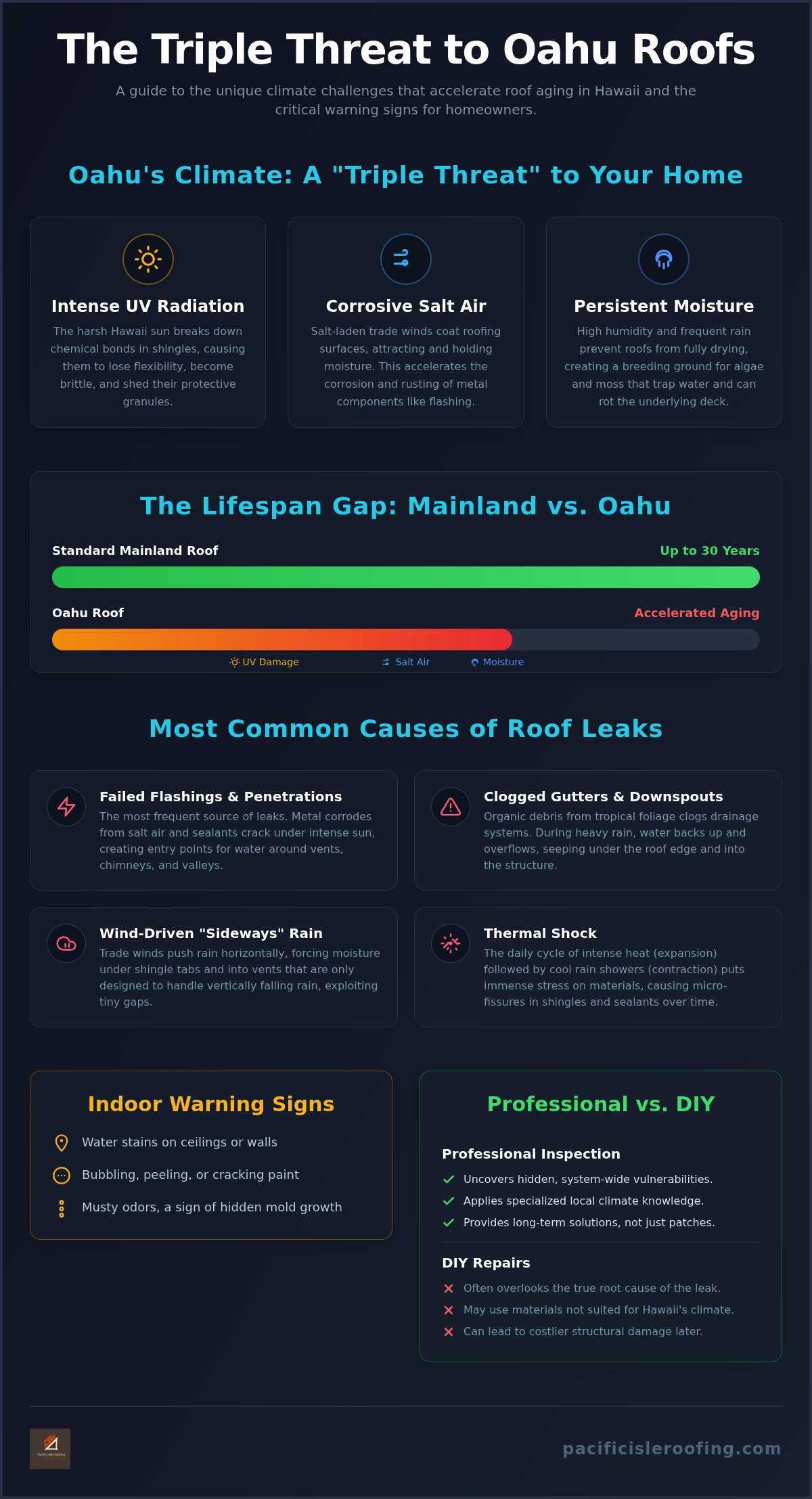
Oahu’s natural beauty masks a harsh environment for residential building materials. Our island presents a "triple threat" to every home: relentless UV radiation, corrosive salt air, and persistent tropical moisture. These three elements work together to accelerate the aging process of even the most premium roofing systems. Understanding these Common Causes of Leaks is vital for long-term home protection and peace of mind.
The Hawaii sun is significantly more intense than what most mainland roofs experience. Intense UV rays strike the roof surface and break down the chemical bonds within asphalt shingles. As the essential oils in the shingles evaporate, the material loses its flexibility and the protective granules begin to wash away. This chemical degradation is one of the primary causes of roof leaks Oahu homeowners see as their roofs reach the ten or fifteen-year mark.
Humidity also plays a silent but destructive role. In windward communities like Kaneohe, the air often remains saturated, which prevents roofs from drying out completely between rain showers. This constant dampness creates a breeding ground for algae and moss that trap even more moisture against the shingles. Every neighborhood has its own microclimate that dictates a roof's lifespan. While the heat of Kapolei might bake a roof into brittleness, the dampness of the valleys can rot the underlying wooden deck from the outside in.
The Impact of Extreme UV and Thermal Shock
During a typical day, your roof absorbs an incredible amount of heat, causing the materials to expand. When a sudden afternoon shower rolls through, the temperature of the shingles drops rapidly. This forces the materials to contract in a matter of minutes, putting immense stress on the fasteners and sealants. This cycle is known as thermal shock. Thermal shock is the rapid expansion and contraction of roofing materials. Over time, this movement creates small fissures in the shingles and pulls at the flashing, creating entry points for water.
Wind-Driven Rain and the 'Sideways' Factor
Standard mainland roofing techniques often fail in Hawaii because they are designed for rain that falls vertically. On Oahu, trade winds frequently push moisture horizontally, creating "sideways rain" that can bypass traditional barriers. These winds force water under shingle tabs and into attic vents that were never intended to handle horizontal pressure. Ridge vents and soffits become vulnerabilities during tropical storms if they aren't specifically rated for high-wind environments. This wind-driven moisture is among the most frequent causes of roof leaks Oahu residents report during the winter months, as it exploits gaps that remain dry during normal weather.
The Most Common Causes of Roof Leaks on Oahu
While the climate creates the conditions for decay, specific architectural vulnerabilities are the actual culprits behind moisture intrusion. Identifying these points of failure requires a keen eye and an understanding of how island homes are built. From the peaks of the ridge vents to the edges of the gutters, several common factors consistently lead to trouble for local residents.
Failed Flashings and Roof Penetrations
Flashing refers to the thin metal pieces installed to direct water away from critical areas where the roof surface meets a vertical plane, such as a chimney or vent pipe. These components are the primary line of defense, yet they represent the most frequent source of leaks. The National Roofing Contractors Association notes that proper flashing installation is essential for a watertight system, but our environment is particularly hard on these materials.
In coastal areas, salt air accelerates the corrosion of metal flashing, often causing it to rust through or pit. Additionally, the sealants used around these penetrations often dry out and crack under the intense Hawaii sun long before the shingles themselves fail. A specific island challenge is the "dead valley," an architectural feature where two roof slopes meet in a way that traps water. Without specialized local knowledge, installers may leave these areas prone to pooling, which eventually forces water under the shingles.
The Danger of Clogged Gutters and Downspouts
Heavy tropical downpours can overwhelm even the best-designed drainage systems if they aren't perfectly clear. In high-foliage neighborhoods like Manoa or Wahiawa, gutters can fill with organic debris in a single season. When water cannot flow freely through the downspouts, it backs up and sits against the roof's edge. This leads to a process called "wicking," where moisture is pulled upward into the roof deck and fascia boards, causing rot that remains hidden until it's too late.
Accumulated debris in the roof valleys also creates a sponge-like effect. Leaves and pine needles trap moisture against the shingles, preventing them from drying out in the afternoon sun. This constant dampness softens the asphalt and allows granules to slough off, leaving the underlying mat exposed to the elements. For homes surrounded by large trees, a semi-annual maintenance schedule is the only way to prevent these silent causes of roof leaks Oahu homeowners often overlook.
Physical damage also plays a role, especially during high-wind events where falling branches or flying debris can puncture shingle surfaces. However, many issues stem from improper original installation by inexperienced or unlicensed contractors who don't account for wind-driven rain patterns. If you're concerned about the integrity of your home's exterior, a professional roofing inspection can identify these vulnerabilities before they lead to structural damage.
Shingle Roof Leak Repair: Identifying the Signs of Failure
Catching a leak early is the difference between a simple shingle roof leak repair and a full structural restoration. On Oahu, the high humidity means that moisture intrusion quickly leads to more severe complications like wood rot or electrical issues. Identifying the common causes of roof leaks Oahu families experience requires a proactive approach to maintenance and a keen eye for detail.
Inside your home, the signs are often subtle at first. Look for yellow or brown water stains on the ceiling, which indicate a slow, persistent drip. Bubbling paint on the walls or a faint, musty smell in the attic are also clear indicators of moisture. Because mold can begin to grow within 24 to 48 hours in Hawaii's humid environment, these internal signals should never be ignored. They are the final evidence that an external breach has already occurred, potentially compromising your home's safety.
External signs are often visible from the safety of the ground with a pair of binoculars. You should look for missing, cracked, or damaged shingles, especially after a period of heavy trade winds or a tropical storm. Any shingle that appears out of alignment is a potential entry point for water. Regular checks help you stay ahead of the curve, ensuring that the causes of roof leaks Oahu weather creates don't turn into a household emergency.
Granule Loss and Shingle Brittleness
Asphalt shingles are coated with ceramic granules that serve as a vital UV shield for the underlying asphalt layer. When these granules wash away, the shingle becomes "bald" and loses its ability to shed water effectively. You can often find evidence of this by checking your downspout exits. If you see a significant accumulation of what looks like coarse sand or grit, it’s a sign that your roof is becoming brittle and nearing the end of its functional life.
Curling, Cracking, and Missing Shingles
Look for shingles that are no longer lying flat against the roof deck. "Cupping" occurs when the edges of the shingle turn upward, while "clawing" describes shingles that pop up in the middle. Both conditions leave the roof deck vulnerable to wind-driven rain. High winds can also peel back shingles that have lost their adhesive seal, creating easy entry points. For more detailed diagnostic tips, scheduling professional roofing inspections is the most reliable way to identify hidden vulnerabilities before they escalate.
How Salt Air and Tropical Humidity Impact Roof Longevity
Coastal properties in areas like Kailua and Ewa Beach face a unique chemical assault that goes beyond simple weathering. Salt air is more than just a corrosive force; it acts as a moisture magnet. Salt crystals are naturally hygroscopic, which means they attract and hold water molecules from the surrounding air. This process keeps the surface of your roof damp long after the morning dew should have evaporated in the sun. This persistent moisture creates a constant state of dampness that ranks among the most significant causes of roof leaks Oahu homeowners must address to ensure long-term security.
Another factor unique to our island environment is "Vog," or volcanic smog. When sulfur dioxide from volcanic activity interacts with moisture and sunlight, it can result in acidic rain. Over years of exposure, this acidity slowly etches away at the protective coatings of roofing materials. It weakens the chemical bonds in asphalt shingles and accelerates the pitting of metal components. This environmental combination creates a rate of decay that is significantly faster than what is observed in mainland environments, requiring a more disciplined approach to maintenance.
Coastal Corrosion of Metal Components
Mainland-standard galvanized steel often fails prematurely in our coastal zones. When sea spray reaches your home, it triggers an electrochemical reaction that quickly eats through standard zinc coatings. We frequently encounter "hidden" leaks where the roofing nails have completely rusted away beneath the shingles. This leaves a direct, unobstructed hole through the shingle and into the roof deck. To prevent this, residential specialists prioritize stainless steel or high-grade aluminum for all fasteners and flashing. Using the wrong materials in a coastal environment is one of the preventable causes of roof leaks Oahu residents often face.
Algae, Moss, and Structural Rot
The black streaks commonly seen on local roofs aren't just dirt or soot. They are often colonies of Gloeocapsa magma, a hardy type of cyanobacteria that thrives in our high humidity. This organism actually feeds on the limestone filler used in many shingles, weakening the material and causing it to become brittle over time. Moss poses an even greater threat because it acts like a sponge, trapping water against the shingles and promoting dry rot in the rafters below. Because these biological and chemical threats are often invisible from the ground, a professional roofing inspection is the most effective way to ensure your home remains a safe haven for your family.
Protecting Your Oahu Home with Professional Roofing Services
Tackling the underlying causes of roof leaks Oahu residents encounter requires a level of precision that goes beyond temporary patches. While it is tempting to address a visible drip with a quick DIY fix, these efforts often mask the symptoms rather than curing the disease. A tube of sealant or a misplaced shingle cannot reverse the chemical degradation caused by UV rays or the structural rot fueled by our high humidity. Professional intervention ensures that the root cause is identified and resolved, preventing a minor nuisance from evolving into a catastrophic failure.
Choosing a licensed contractor is not just a matter of quality; it is a necessity for warranty compliance and long-term security. Pacific Isle Roofing holds license C-42-31088, representing a commitment to the highest standards of residential craftsmanship. With over 20 years of local island experience, our team understands the specific nuances of homes in Honolulu, Kaneohe, Kailua, and Ewa Beach. We prioritize a methodical approach that respects the integrity of your structure and the safety of your family.
The Importance of Local Licensed Inspections
A licensed inspector possesses the specialized knowledge to identify climate-specific failures that the untrained eye might miss. We know exactly where to look for the hidden corrosion of fasteners in coastal zones and how to evaluate the subtle signs of "thermal shock" in our mountain valleys. Beyond the physical repair, professional documentation is a vital asset for homeowners. Should you need to file an insurance claim following a tropical storm, having a detailed record of your roof’s condition from a seasoned professional can significantly streamline the process. Our deep historical knowledge of Oahu’s neighborhoods allows us to provide assessments that are both accurate and locally relevant.
Proactive Maintenance vs. Emergency Repairs
The financial and emotional difference between proactive care and emergency response is substantial. A small, timely shingle roof leak repair is a manageable investment that preserves the life of your roofing system. In contrast, an emergency replacement necessitated by neglected damage often comes at a higher cost and with the added stress of potential mold growth or structural instability. By the time a leak becomes an emergency, the window for simple repairs has often closed.
Your home is likely your most significant investment, and its roof is the first line of defense. Protecting that investment requires the steady hand of a veteran specialist who prioritizes longevity over flashy marketing. We invite you to take a proactive step toward peace of mind. Schedule your professional roof assessment with Pacific Isle Roofing today to ensure your home remains a stable and dry sanctuary for years to come.
Securing Your Peace of Mind Against the Island Elements
Maintaining a home on Oahu is a unique commitment that requires a proactive approach to exterior care. You've seen how the "triple threat" of UV radiation, corrosive salt air, and wind-driven rain creates the most common causes of roof leaks Oahu homeowners face. From identifying the early signs of granule loss to understanding the chemical impact of Vog, your awareness is the first step in avoiding costly structural repairs and hidden mold growth.
Pacific Isle Roofing is a locally owned and operated residential specialist with over 20 years of experience serving our island community. As a licensed Hawaii contractor (C-42-31088), we provide the steady, expert guidance you need to protect your family's sanctuary. Don't wait for a tropical storm to reveal a vulnerability that could have been addressed today.
Protect your home from the elements; contact Pacific Isle Roofing for an expert leak assessment.
You deserve the confidence that comes with a secure, well-maintained roof that stands strong against everything the Pacific throws its way.
Frequently Asked Questions
What are the most common causes of roof leaks on Oahu?
The primary causes include failed flashing around penetrations like vent pipes, accumulated organic debris in valleys, and the chemical breakdown of shingles due to intense UV exposure. Wind-driven rain also frequently exploits gaps in ridge vents or soffits that remain dry during vertical showers. These environmental factors are the leading causes of roof leaks Oahu homeowners encounter throughout the year.
How do I know if my shingle roof leak needs a repair or a full replacement?
A full replacement is generally required if more than 25% of the roof surface is damaged, as mandated by the City & County of Honolulu building code. If the damage is localized to a single area, such as a chimney flashing or a small section of shingles, a targeted repair is often sufficient. A professional inspection is the only way to determine if the underlying roof deck remains structurally sound and if a repair will be effective.
Does salt air really damage asphalt shingles in Hawaii?
Yes, salt air is highly destructive because salt crystals attract moisture from the atmosphere and hold it against the roofing surface. This process, known as hygroscopy, keeps shingles damp for longer periods and accelerates the corrosion of metal fasteners. Over time, this constant moisture weakens the asphalt and leads to premature brittleness, which is why coastal homes often require more frequent maintenance than those further inland.
How much does a typical roof leak repair cost on Oahu?
The cost of a repair depends on the extent of the damage, the height of the roof, and the specific materials required for the fix. Factors like the precise location of the leak and the condition of the underlying wooden deck will influence the final investment. Addressing a small leak early is always more cost-effective than waiting for structural rot to occur, which significantly increases the complexity of the job.
Can I repair a shingle roof leak myself or do I need a pro?
While minor shingle replacements might seem simple, professional expertise is necessary to identify the root cause and ensure the repair is truly watertight. Improper DIY fixes often fail to address the underlying issues and can potentially void your manufacturer's warranty. A licensed professional has the safety equipment and specialized knowledge to guarantee a repair that stands up to Hawaii's unique wind and rain patterns.
How often should I have my Oahu roof inspected for leaks?
Most residential specialists recommend a professional inspection at least once a year, or twice a year for homes in high-foliage areas like Manoa. Regular roofing inspections allow you to catch small vulnerabilities like cracked sealants or clogged valleys before they turn into household emergencies. This proactive schedule is the most effective way to extend the functional lifespan of your roofing system.
Why is my roof leaking only when it rains sideways?
Sideways rain is pushed by trade winds at an angle that can bypass traditional roofing barriers designed for vertical rainfall. This wind-driven moisture often enters through ridge vents, attic fans, or beneath shingle tabs that have lost their adhesive seal over time. Standard mainland techniques sometimes overlook these specific entry points, which is why local knowledge of island wind patterns is vital for a watertight home.
What should I do immediately if I find a roof leak in my Honolulu home?
Your first priority is to protect your interior belongings by placing a bucket under the drip and moving any furniture or electronics away from the moisture. After the immediate area is secure, document the damage with photos for insurance purposes and avoid climbing onto a wet, slippery roof yourself. Contact a licensed residential specialist to perform a detailed assessment and develop a plan to prevent further water intrusion.


