

On Oahu, a roof isn't just a structural component; it is a high-performance shield engineered to survive 150 mph hurricane-force winds. Navigating the latest 2026 Oahu building codes for roof replacement is the only way to ensure your home remains a safe haven while protecting the long-term value of your property. We understand that the Department of Planning and Permitting (DPP) process often feels like a complex maze of bureaucracy and technical jargon. It is common to feel overwhelmed by shifting regulations or to worry whether a necessary repair will suddenly require a full, expensive permit under the updated 2026 standards.
You deserve the peace of mind that comes from knowing your home is built to the highest local safety standards. This guide will help you master the essential permitting rules and Hawaii residential roofing standards to ensure your new roof is legal, safe, and perfectly adapted to our unique island climate. We will provide a clear roadmap for the current permit process, explain the critical wind and fire safety requirements, and give you the confidence to ensure your roofing project is fully code-compliant.
Key Takeaways
- Understand how the 2018 International Residential Code and specific local amendments dictate the structural integrity of your home's defense against island elements.
- Navigate the latest Oahu building codes for roof replacement to determine if your project requires a full DPP permit or falls under minor repair exemptions.
- Identify the specific wind speed ratings and hurricane-resistant standards required for your neighborhood to ensure your roof is built for maximum safety.
- Discover why Class A fire-rated materials are the standard for Honolulu County and which roofing systems provide the best long-term durability.
- Learn how to verify a contractor’s C-42 license to guarantee your installation is performed by a qualified professional committed to local safety standards.
Understanding Hawaii Residential Roofing Standards and the IRC
Hawaii's approach to home protection is governed by a specialized set of regulations designed for our isolated geographic location. The City and County of Honolulu officially adopted the 2018 International Residential Code (IRC) with specific local amendments that became effective on August 9, 2024. These Building Codes are not merely suggestions; they are the legal baseline for every residential structure on the island. The Honolulu Department of Planning and Permitting (DPP) oversees these standards to ensure that every roof can withstand the unique pressures of a tropical environment. Understanding the Oahu building codes for roof replacement is the first step in ensuring your home remains a safe, legal, and durable asset for decades to come.
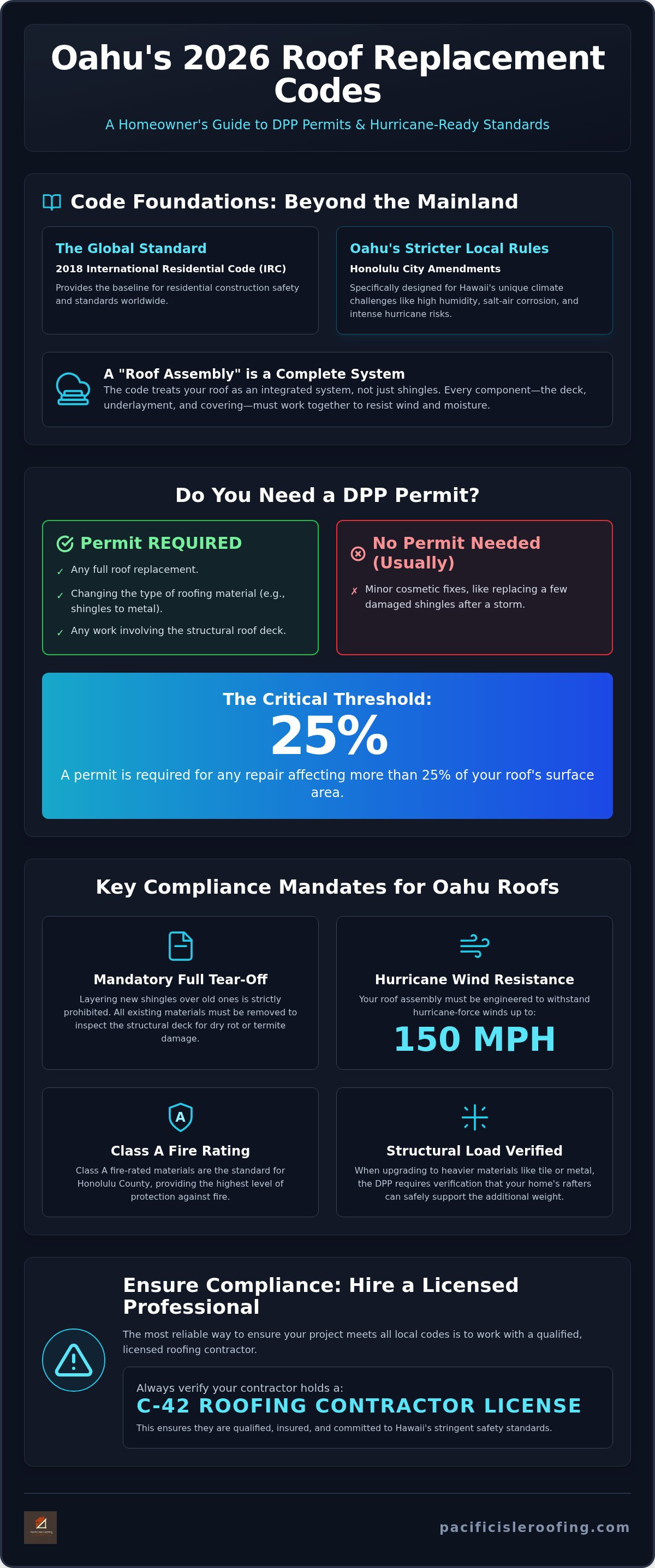
Under current law, a "roof assembly" is defined as a cohesive system rather than just a top layer of shingles. This assembly includes the roof deck, the underlayment, and the final roof covering. Each component must be tested and certified to work in harmony to resist moisture intrusion and wind uplift. When one part of the system fails to meet the code, the entire structure is considered non-compliant and potentially dangerous during a storm.
The 2018 IRC vs. Local Oahu Amendments
While the 2018 IRC serves as the global foundation, the Honolulu City Addendum #1, which took effect on March 11, 2025, introduces critical local requirements. Building codes are significantly stricter on Oahu than on the mainland because we face higher humidity, salt-air corrosion, and intense hurricane risks. These 2026 standards prioritize energy efficiency and solar readiness, reflecting a commitment to long-term sustainability. This means that a roof compliant in California or Florida may not meet the rigorous standards required for a home in Manoa or Ewa Beach.
Reroofing vs. New Installation: Code Distinctions
One of the most critical updates in the Oahu building codes for roof replacement involves the mandatory "tear-off" process. In many mainland jurisdictions, homeowners are sometimes permitted to install a second layer of shingles over an existing roof. On Oahu, this practice is strictly prohibited. The code now requires a complete removal of all existing materials down to the structural deck before any new installation begins. This ensures that a roofing professional can perform a thorough structural inspection of the wood below.
This requirement is essential for safety. It allows for the identification of dry rot or termite damage that would otherwise be hidden. If you are upgrading to a heavier material like clay tile or certain metal systems, the DPP requires verification that your home's rafters can support the additional weight. By mandating a clean start, the code ensures that your new roof is anchored directly to a sound structure, providing the highest level of protection against high-velocity winds.
The Honolulu DPP Permit Process for Roof Replacement
Securing a building permit is often the most stressful part of a home renovation. However, understanding the Oahu building codes for roof replacement makes the process predictable and manageable. The Department of Planning and Permitting (DPP) serves as the gatekeeper for local safety, ensuring that every significant structural change meets the rigorous standards required for our island environment. A valid permit is more than just a legal requirement; it is a vital document for your home insurance validity and future resale value, proving that your investment was installed according to professional standards.
Thresholds: When Do You Legally Need a Permit?
Not every hammer swing requires government oversight, but the line between a minor repair and a permitted project is clearly defined. In Honolulu, you must obtain a permit for any full roof replacement or any repair that affects more than 25% of the roof's surface area. While the "50% rule" is often discussed in the context of substantial improvements to a structure, the 25% threshold is the critical benchmark for roofing specifically. Cosmetic fixes, such as replacing a few damaged shingles after a storm, generally do not require a permit. However, any work involving the structural deck or changing the material type will trigger a filing requirement. Failing to follow the Oahu building codes for roof replacement can lead to expensive stop-work orders, double permit fees, and complications when you eventually try to sell your home.
Working with the Department of Planning and Permitting
Most homeowners today utilize the DPP's online application portal, though in-person filings at the Frank F. Fasi Municipal Building are still an option. As of August 2026, the estimated timeline for a residential roof replacement permit approval is 3 to 6 weeks. This waiting period allows the city to verify that your chosen materials meet the necessary high-wind standards established by the Hawaii State Legislature and local building ordinances. Permit fees for a typical residential roof in Honolulu range from $200 to $1,200, depending on the valuation of the work.
Navigating this bureaucracy doesn't have to be a solo effort. A licensed contractor like Pacific Isle Roofing handles the "DPP headache" for you by preparing the necessary documentation and ensuring all technical specifications are accurate from the start. Professional Roofing Inspections can help determine exactly which permit path your home requires, saving you time and preventing potential filing errors. By letting an expert manage the paperwork, you can focus on choosing the right materials for your home while remaining confident that every step is fully code-compliant.
Hurricane Ratings and Wind Resistance Requirements
Living in the Central Pacific requires a roof that does more than just shed rain; it must withstand the immense pressure of hurricane-force winds. The Honolulu Department of Planning and Permitting (DPP) enforces some of the most stringent wind resistance standards in the nation. Under the updated Oahu building codes for roof replacement, new residential roofs must be designed to resist wind speeds of up to 150 mph. This High-Velocity Hurricane Area (HVHA) standard ensures that your home remains intact even when facing the most severe Pacific storms.
Meeting these standards involves more than just selecting a durable material. It requires a meticulous fastening approach. While four nails per shingle might suffice in calmer climates, Oahu's high-wind zones require a minimum of six nails per shingle. This specific pattern significantly increases the mechanical bond between the shingle and the deck, preventing individual pieces from lifting or tearing away. For metal roofing, the code mandates specific screw spacing and bracket types that have been engineered to handle the uplift pressures common in coastal areas like Hawaii Kai or the North Shore.
Understanding Wind Uplift Standards
Wind damage rarely happens because the wind pushes the roof down. Instead, it occurs because of wind uplift, a vacuum effect created as air rushes over the roof's peak. To combat this, the Oahu building codes for roof replacement require materials tested to the ASTM D3161 standard, specifically Class F ratings. This certification proves the material can survive 150 mph gusts without failure. Beyond the shingles, the code emphasizes the importance of roof-to-wall connections. Metal hurricane ties must be properly installed to anchor the rafters to the wall plates, ensuring the entire roof structure stays attached to the house during a storm.
Secondary Water Barriers: A Hawaii Necessity
Wind is only half the battle; the horizontal rain that accompanies a tropical storm can find even the smallest gap in your defenses. Modern codes now place a heavy emphasis on secondary water barriers. This involves installing a self-adhering waterproof membrane directly onto the roof deck before the shingles or metal panels are applied. While this adds to the initial installation steps, it provides a crucial layer of protection. If the primary roofing material is damaged or blown off, this membrane keeps the interior of your home dry. In the humid Oahu climate, using high-quality, breathable underlayment is also essential to prevent moisture from becoming trapped against the wood deck, which leads to premature rot and structural failure.
Fire Classification and Material Standards for Oahu Homes
Safety on Oahu extends beyond wind resistance; fire protection is a primary pillar of the local regulatory framework. The City and County of Honolulu adopted the 2021 edition of the National Fire Protection Association 1 (NFPA 1), which became effective on January 3, 2025. Under these Oahu building codes for roof replacement, Class A fire-rated roofing is the gold standard for residential properties. This rating represents the highest level of protection against external fire spread. It is a critical requirement in our island's densely populated valleys and areas bordering brush-heavy terrain.
Different materials achieve this rating through various engineering methods. High-quality asphalt shingles, standing seam metal panels, and clay tiles all provide Class A protection when installed as part of a certified assembly. Beyond the primary material, Section R903 of the code dictates strict flashing and weather protection standards. These rules ensure that transitions between the roof and walls, chimneys, or valleys are both watertight and fire-secure. If you are unsure which materials best suit your neighborhood’s specific microclimate, schedule one of our professional Roofing Inspections to get expert guidance on code-compliant options.
Ventilation Codes: Beating Oahu's Humidity
Proper attic ventilation is a legal requirement that directly impacts the longevity of your roof. The 2018 IRC mandates a specific ratio, often referred to as the 1/150 rule. This requires one square foot of net free ventilating area for every 150 square feet of attic floor space. In Oahu's humid climate, balancing intake vents at the eaves with exhaust vents at the ridge is essential to prevent heat and moisture buildup. Without this balance, trapped humidity can lead to deck rot and mold, potentially voiding your material warranty and violating Hawaii residential roofing standards.
Salt Air and Corrosion: Material Longevity
Oahu's microclimates vary wildly, and the code accounts for the destructive power of salt air. For homes in coastal communities like Kailua, Aina Haina, or Ewa Beach, standard galvanized fasteners are often insufficient. Oahu building codes for roof replacement typically require stainless steel fasteners for homes located within 3,000 feet of the ocean. Salt spray can corrode standard nails in just a few years, compromising the roof’s ability to stay attached during high winds. Using corrosion-resistant materials is a hallmark of professional craftsmanship and a necessity for ensuring your investment survives the island's harsh coastal environment.
Ensuring Compliance: Hiring Licensed Oahu Contractors
The technical requirements outlined in previous sections are only as effective as the professional who implements them. When it comes to Oahu building codes for roof replacement, there is a significant legal and practical difference between a general "handyman" and a C-42 licensed roofing contractor. In Hawaii, a handyman is legally restricted from performing work that exceeds a specific dollar amount or requires a building permit. Hiring an unlicensed individual for a project as critical as a roof replacement leaves you vulnerable to legal liabilities, voided insurance policies, and potential structural failure. A C-42 license, like the one held by Pacific Isle Roofing (C-42-31088), ensures the contractor has the specialized knowledge and proven experience to meet Hawaii residential roofing standards.
Homeowners should always verify a contractor's status before signing a contract. The Department of Commerce and Consumer Affairs (DCCA) provides the MyPVL portal, an essential tool for confirming that a license is active and in good standing. A professional contractor does more than just install shingles; they act as your representative with the Department of Planning and Permitting. They are responsible for securing the necessary permits, scheduling city inspections, and ensuring that every phase of the project adheres to the 2018 IRC and local amendments. Choosing a specialist who focuses exclusively on residential roofing ensures your home receives the dedicated attention it requires without the distractions of commercial or solar installations.
The Inspection Phase: What to Expect
Compliance is verified through a series of inspections conducted by Honolulu County officials. Depending on the complexity of your project, the city may require a mid-progress inspection to verify the underlayment and flashing before the final roofing material is applied. A final inspection occurs once the work is complete to ensure the entire system meets the Oahu building codes for roof replacement. Common reasons for failed inspections include incorrect nailing patterns, improper attic ventilation, or the use of non-compliant fasteners in coastal salt-spray zones. If work is done incorrectly by an unlicensed worker, you may receive a "Notice of Violation," which can lead to daily fines and the requirement to tear off and redo the work at your own expense.
Protecting Your Investment with Warranties and Insurance
Strict adherence to building codes directly impacts the financial security of your home. Most insurance providers in Hawaii require proof of code compliance to maintain coverage or to offer lower premiums for hurricane protection. Additionally, manufacturer warranties for premium materials are often contingent on professional installation. If a roof is not installed according to the manufacturer's code-verified specifications, the warranty may be voided. Before your contractor finishes the job, ensure you have a final checklist that includes a clean site, a signed-off permit from the DPP, and a clear understanding of the difference between the manufacturer’s material warranty and the contractor’s workmanship guarantee. This methodical approach ensures your investment is protected for its full expected lifespan.
Protecting Your Home with Island-Ready Standards
A new roof is a significant investment that serves as your home's primary defense against the Pacific’s unique environmental challenges. By understanding the 150 mph wind uplift requirements and the necessity of proper attic ventilation, you ensure your property remains safe and durable. We have seen how following the correct Oahu building codes for roof replacement preserves your insurance eligibility and maintains your home's long-term resale value. These regulations are not just bureaucratic hurdles; they are the essential benchmarks of quality that protect our local community.
Pacific Isle Roofing brings over 20 years of local experience to every residential project. As a licensed Hawaii contractor (C-42-31088), we specialize in hurricane-rated systems that meet or exceed the most recent 2026 standards. We handle the technical details and the DPP paperwork so you don't have to worry about the complexity of the permitting process. Schedule your code-compliant roof inspection with Pacific Isle Roofing today! We are here to provide the peace of mind that comes from a roof built with integrity and expert craftsmanship. Your home is in safe hands.
Frequently Asked Questions
Do I need a permit to repair a few shingles on my Oahu roof?
You don't need a permit for minor cosmetic repairs that affect less than 25% of your roof's total surface area. However, if the damage requires structural work or if you are replacing the entire roof assembly, the Oahu building codes for roof replacement mandate a formal permit from the DPP. It's always best to have a professional inspection to confirm the scope of work and ensure your home stays compliant.
How long does it take to get a roofing permit from the Honolulu DPP in 2026?
The current estimated timeline for residential roofing permit approval is between 3 and 6 weeks. While processing times can fluctuate based on the volume of applications at the Frank F. Fasi Municipal Building, working with an experienced contractor can help prevent common filing errors that lead to delays. Professional guidance ensures your documentation is accurate from the start, allowing the project to move forward without unnecessary administrative setbacks.
What are the wind speed requirements for new roofs in Ewa Beach?
All new and replacement roofs in Ewa Beach and across Oahu must be engineered to withstand wind speeds of up to 150 mph. This High-Velocity Hurricane Area (HVHA) standard is a critical part of the updated building codes. It ensures that your home is prepared for the extreme pressures of a major tropical storm or hurricane, providing long-term security for your family and your property investment.
Can I install a second layer of shingles over my old roof on Oahu?
No, the Honolulu building code strictly prohibits installing a new roof over an existing layer of shingles. A complete tear-off of all old materials down to the structural wood deck is mandatory. This requirement allows for a thorough inspection of the deck for rot or termite damage before the new system is installed, ensuring a solid foundation for your 2026 code-compliant roof replacement.
How do I check if my roofing contractor is properly licensed in Hawaii?
You can verify a contractor's license through the Hawaii Department of Commerce and Consumer Affairs (DCCA) MyPVL portal. Look for a current C-42 roofing contractor license, which is the specific designation required for professional residential roofing work. Pacific Isle Roofing maintains license C-42-31088 to ensure full compliance with state regulations and to give homeowners confidence in our specialized expertise and neighborly dedication to service.
What happens if I replace my roof without a permit in Honolulu County?
Proceeding without a permit can result in significant legal and financial consequences, including stop-work orders and double permit fees. Perhaps more importantly, unpermitted work can void your homeowner's insurance policy and create serious title issues when you try to sell your home. Adhering to the Oahu building codes for roof replacement protects your property's value and ensures that all work meets modern safety standards.
Are hurricane ties required for a simple roof replacement?
Yes, the 2018 IRC and local amendments require proper roof-to-wall connections using approved hurricane ties. These metal connectors anchor the rafters to the wall plates, preventing the roof from lifting during high-wind events. If your home was built before these standards were in place, they must be addressed during a full replacement to ensure the structure remains safe and fully compliant with current safety laws.
Does the building code require specific ventilation for my attic?
The building code requires a balanced attic ventilation system following the 1/150 rule, which provides one square foot of ventilation for every 150 square feet of attic space. This balance of intake and exhaust vents is essential for controlling humidity and preventing heat buildup. Proper ventilation is a key requirement of Hawaii residential roofing standards to prevent deck rot and extend the life of your premium roofing materials.


