
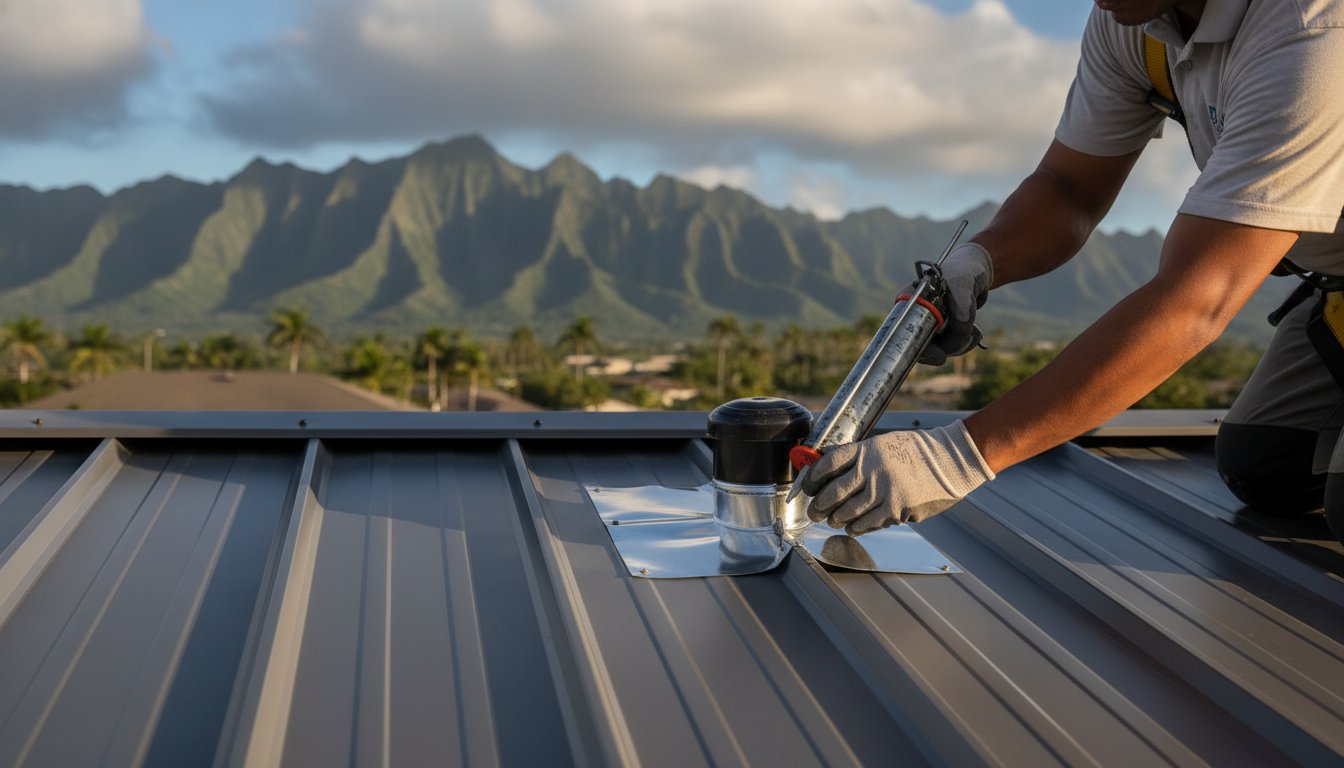
Could the smallest pieces of metal on your roof be the only thing standing between your living room and a tropical downpour? Many homeowners on Oahu focus solely on the condition of their shingles, but the real vulnerability often lies in the flashing around chimneys, vents, and valleys. When a heavy Kona storm hits, these critical transition points are the first to fail if they have been compromised by salt-driven corrosion or aging sealant. If you have noticed mystery leaks or visible rust on your roof vents, you are already facing the high stakes of Hawaii's humid environment and the fear of hidden mold growth.
We understand the stress that comes with protecting your property from moisture and structural decay. This guide provides a clear path forward, showing you how to identify early warning signs and when to seek a professional roof flashing repair Oahu to extend the lifespan of your existing roof. You'll gain a better understanding of essential roofing terminology and the impact of local building codes. We will preview a practical maintenance checklist designed to help you address vulnerable areas before they turn into costly interior damage, ensuring your home remains a dry and secure sanctuary throughout the rainy season.
Key Takeaways
- Learn why metal flashing is the most critical defense for your roof's intersections, directing water away from vulnerable areas like chimneys and valleys.
- Identify early warning signs of failure, such as salt-air corrosion and UV-degraded sealants, to prevent moisture from reaching your home's interior.
- Understand how a professional roof flashing repair Oahu serves as a cost-saving measure that extends the lifespan of your existing roofing system.
- Discover the methodical steps of a high-quality repair, from the complete removal of old materials to the vital inspection of the underlying roof deck for rot.
- See how working with a licensed local specialist ensures your home remains compliant with Hawaii building codes while providing long-term security against tropical storms.
What is Roof Flashing and Why is it Critical on Oahu?
Roof flashing is the weather-resistant metal transition installed at critical roof intersections. It serves as the unsung hero of residential waterproofing, quietly shielding your home from the elements. While shingles cover the vast majority of your roof's surface, they cannot effectively seal the gaps where different planes meet or where structures like chimneys penetrate the roofline. To understand What is Roof Flashing in a technical sense, one must view it as a strategic barrier designed to manage water flow where roofing materials are interrupted. Its primary function is to redirect water away from these vulnerable points and toward your gutters or the roof's edge.
By 2026, modern Oahu homes have increasingly featured complex rooflines with multiple gables and steep pitches. These architectural designs demand precision during both installation and routine maintenance. Without high-quality materials and expert placement, even a small gap can lead to a significant breach during a storm. This is why localized knowledge is essential when considering a roof flashing repair Oahu, as our unique environmental demands require more than a standard mainland approach. Professional attention ensures that these metal transitions are properly integrated into the overall roofing system.
Common Types of Flashing Found on Hawaii Homes
Oahu residences typically utilize several specialized flashing components to ensure a watertight seal. Each serves a distinct purpose based on the geometry of the roof:
- Step Flashing: This consists of L-shaped metal pieces installed in overlapping layers where the roof meets a vertical wall, such as a dormer or a second story.
- Valley Flashing: This protects the "V" shaped channel where two roof planes intersect. These areas handle the highest volume of runoff during tropical storms.
- Vent Pipe Boot: These are metal or reinforced rubber seals that surround plumbing exhausts and electrical masts, preventing water from seeping down into the attic space.
The Vulnerability of Transitions
Experienced roofers know that 90% of residential leaks on Oahu occur at flashing points rather than through the shingles themselves. These transitions are under constant stress from the island's climate. Our strong trade winds can actually drive rain upward, forcing moisture under poorly secured metal if the installation isn't flawless. When water bypasses these barriers, it often stays trapped against the wooden roof deck. This leads to roof rot, a silent and destructive issue that thrives in our humid tropical air. Addressing these vulnerabilities early through a professional roof flashing repair Oahu is the most effective way to prevent structural decay and maintain the integrity of your home's protective envelope.
Signs You Need Roof Flashing Repair: A Diagnostic Checklist
Identifying a failing metal transition before the next heavy rain requires a keen eye and an understanding of how our local environment attacks building materials. On Oahu, the proximity to the ocean means your roof is under constant siege from sodium chloride. This salt air accelerates oxidation, turning minor surface wear into structural failure much faster than homeowners might expect in drier, inland climates. Recognizing these signs early allows for a targeted roof flashing repair Oahu rather than a full and costly roof replacement. Catching these issues early is essential for maintaining the long-term integrity of your structure.
- Visual Rust or Pitting: If you see orange streaks or small holes in the metal, the protective galvanization has failed. In coastal areas like Ewa Beach or Kaneohe, this process is significantly faster. Rust is a clear signal that the metal is becoming porous and will soon allow water to seep through.
- Cracked or Peeling Sealant: The intense tropical sun at our latitude emits high levels of UV radiation. Standard roofing caulking that might last a decade on the mainland often dries out and cracks within a few years here, leaving gaps for wind-driven rain to enter.
- Gaps Between Flashing and Walls: Our daily temperature swings cause materials to expand and contract. Over time, this thermal movement can pull flashing away from chimneys or parapet walls, breaking the original seal.
- Interior Water Stains: Look for yellow or brown rings on your ceiling. If these stains appear near a chimney, skylight, or where a second story meets a lower roof, the flashing is likely the culprit.
Early detection is the most effective way to maintain the longevity of your home. If you suspect your roof is showing these symptoms, scheduling a professional roofing inspection can provide the clarity you need before the storm season arrives. A seasoned expert can distinguish between simple maintenance needs and structural concerns that require immediate intervention.
The Binocular Inspection: Safe DIY Checking
You don't need to climb a ladder to perform a preliminary assessment of your roof's health. Using a pair of binoculars from the safety of your lawn allows you to see "lifting" flashing, where the metal edges have curled upward. Pay close attention to the valleys where two roof planes meet. Debris such as pine needles or leaves often gathers here, trapping moisture against the metal and accelerating rot. If you see organic growth like moss or lichen near your flashing, it's a sign that water is lingering far too long.
Warning Signs in the Attic
A thorough diagnostic check should always include a trip to the attic during or immediately after a rain event. Look for damp insulation directly beneath roof penetrations like vent pipes. You might also see "rust weeping," which appears as dark, metallic stains on the underside of the wooden roof deck. A persistent musty or earthy smell in the attic often indicates that a flashing failure has allowed moisture to accumulate in the wood over several months. These hidden cues are often the first indicators that your home requires professional attention to prevent further decay.
Why Flashing Fails: The Hawaii Environmental Factors
Mainland roofing standards often fall short when applied to the unique climate of the Pacific. While standard industry guides might suggest that metal transitions can last two decades, the environment on our island frequently cuts that lifespan in half. Understanding these specific environmental stressors is the first step in determining why a professional roof flashing repair Oahu is a recurring necessity for local homeowners. The high stakes of home protection in the tropics require a more disciplined approach than what is typically practiced in drier, inland regions.
Salt air corrosion is perhaps the most aggressive force at play. Sodium chloride particles from the ocean settle on galvanized steel surfaces, initiating a chemical reaction that strips away protective zinc coatings. Once this barrier is gone, the underlying steel oxidizes rapidly. In areas within five miles of the coast, this "salt spray zone" can cause standard flashing to become porous and brittle in under ten years. This accelerated deterioration is a primary reason why we prioritize the use of premium materials that can withstand constant maritime exposure.
Relentless UV exposure further complicates the issue. Our high-altitude tropical sun delivers intense radiation that degrades the polymer bonds in roofing sealants. When these caulks and adhesives lose their elasticity, they dry out and pull away from the metal, creating microscopic paths for water. This is often exacerbated by thermal shock. On a typical afternoon, your roof temperature might soar before a sudden, heavy rain shower causes the metal to contract rapidly. This constant cycle of expansion and contraction puts immense stress on every joint and fastener, eventually breaking even the most robust seals.
The Coastal Factor: Wind-Driven Rain
Oahu trade winds add a mechanical challenge to waterproofing that standard flashing isn't designed to handle. While rain in other climates falls vertically, our winds can drive moisture horizontally or even upward. This force pushes water into small gaps that would remain dry in calmer conditions. To combat this, we emphasize the importance of "counter-flashing." This secondary layer of metal overlaps the primary flashing, providing a redundant barrier that prevents wind-driven rain from bypassing the main seal during a heavy storm.
Material Science for the Islands
Selecting the right materials is a cornerstone of our mission-driven approach to roofing. Pacific Isle Roofing recommends utilizing heavier gauges of metal than those typically found in standard mainland kits. For homes located in high-corrosion areas, we often suggest copper or stainless steel as a superior alternative to galvanized steel. While these materials represent a higher standard of craftsmanship, their natural resistance to salt air makes them an ideal choice for ensuring the long-term security of your home. Investing in superior materials during a roof flashing repair Oahu significantly extends the interval between maintenance needs, providing the peace of mind every homeowner deserves.

The Professional Flashing Repair Checklist
A successful roof flashing repair Oahu requires a methodical approach that goes beyond simply covering a leak. We prioritize a thorough restoration process to ensure the long-term security of your home. This disciplined sequence of steps ensures that every vulnerability is addressed with professional precision, moving past the quick fixes that often fail during the first heavy rain. Our focus remains on craftsmanship and the use of premium materials that can withstand our specific island climate.
- Step 1: Complete Removal: We begin by stripping away all old, degraded sealants and rusted metal. Leaving old materials in place prevents a proper bond and can hide ongoing issues that lead to future failures.
- Step 2: Deck Assessment: Once the area is cleared, we perform a detailed inspection of the underlying roof deck. We look for signs of rot or moisture damage that may have occurred during previous storms, ensuring the structural foundation is sound.
- Step 3: Custom Fabrication: Every roof has unique angles and transitions. We fabricate new flashing on-site to match your specific roof pitch perfectly, creating a seamless barrier that pre-fabricated kits cannot match.
- Step 4: Precision Installation: The new metal is secured using high-grade, corrosion-resistant fasteners and specialized UV-resistant solar sealants. These materials are specifically chosen for their ability to maintain integrity under the intense tropical sun.
Why "Patching" is Rarely the Answer
Many homeowners are tempted by the convenience of "roofing cement" or layering new sealant over old, brittle caulk. This approach is fundamentally flawed for long-term protection. Smearing a patch over a failed seal often traps existing moisture against the wooden structure of your home. This creates an ideal environment for accelerated structural rot, which can compromise the integrity of your entire roofing system without you realizing it. A proper repair requires removing the source of the failure rather than merely masking the symptoms with temporary materials.
The Professional Equipment Advantage
Achieving a watertight seal on complex rooflines requires more than just standard hand tools. We utilize specialized metal brakes to create precise, sharp bends in the flashing material. These tools allow us to create a custom fit that is far superior to standard mainland solutions. Our teams also utilize professional-grade safety harnesses and specialized equipment to navigate steep Oahu rooflines safely and efficiently. Integrating these professional repairs with consistent residential roofing maintenance tips is the most effective way to ensure the longevity of your investment. If you suspect your home has hidden vulnerabilities, scheduling a professional leak repair consultation can help you address these issues before they become major structural problems.
Securing Your Oahu Home with Pacific Isle Roofing
Pacific Isle Roofing brings over 20 years of local experience to every residential project across the island. We view ourselves as more than just service providers; we are a protective guide for homeowners navigating the challenges of a tropical climate. Our localized approach to roof flashing repair Oahu prioritizes high-quality craftsmanship over the temporary fixes that often lead to recurring issues. We understand that a roof is only as strong as its weakest transition point, and we dedicate ourselves to ensuring those points are built to last. This commitment to excellence provides the long-term security every family deserves.
Maintaining a current Hawaii license (C-42-31088) is a cornerstone of our professional integrity. This certification ensures that every repair we perform adheres strictly to the 2018 International Building Code and specific Hawaii amendments. Compliance is especially critical in 2026, as new building standards require structures to withstand winds of up to 160 mph. By choosing a licensed specialist, you guarantee that your home's waterproofing meets these rigorous hurricane resistance standards. We focus on long-term residential protection, providing you with the quiet authority of a veteran who prioritizes your safety above all else.
Expert Leak Detection Services
Finding the true source of a leak requires a methodical and steady process. Water often travels along rafters or underlayment before manifesting as a stain on your ceiling, making the entry point difficult to pinpoint. We utilize a disciplined diagnostic approach to trace moisture back to its origin, often discovering that a flashing failure is the primary culprit. Our team provides clear and open dialogue throughout this process, documenting every finding to ensure full transparency. You'll receive a thorough assessment that explains the extent of the damage and the specific steps needed to restore your roof's integrity.
Next Steps: Protect Your Investment
Proactive maintenance is the most effective way to avoid the high costs associated with emergency interventions. Waiting for the next heavy Kona storm to address a known vulnerability increases the risk of interior damage and structural decay exponentially. Addressing these concerns early is a vital cost-saving measure that preserves the lifespan of your existing roof. If you've noticed any of the warning signs discussed in this guide, the time to act is now before the humidity leads to mold growth or rot. We invite you to take the first step toward long-term security. Schedule your professional Oahu roof inspection today to ensure your home remains a dry and steadfast sanctuary for years to come.
Securing Your Sanctuary for the Seasons Ahead
Maintaining the integrity of your roof requires more than just a passing glance at the shingles. As we have explored, the metal transitions at chimneys, valleys, and vents are the true front lines against Hawaii's aggressive environmental factors. By identifying signs of salt air corrosion and UV degradation early, you can prevent minor moisture issues from evolving into significant structural decay or hidden mold growth. Investing in a professional roof flashing repair Oahu is a strategic choice that prioritizes long-term craftsmanship over temporary, unreliable patches.
Pacific Isle Roofing stands as a stable pillar within the community, offering over 20 years of local experience and specialized skill in residential leak detection. As a licensed Hawaii contractor (C-42-31088), we focus on delivering the peace of mind that comes with a dry and secure home. Don't wait for the next heavy storm to discover a vulnerability. You can take a proactive step toward protecting your most significant investment today by working with a seasoned veteran who understands the nuances of island living.
Request an Expert Roof Flashing Assessment
Your home deserves the quiet authority of a professional who prioritizes your well-being and the longevity of your roof. Stay safe, stay dry, and rest easy knowing your home is prepared for whatever the tropical sky brings next.
Frequently Asked Questions
How much does roof flashing repair cost on Oahu?
Repair costs on Oahu are influenced by the island's unique logistics and the higher cost of specialized materials. While minor sealing might be a small investment, a comprehensive roof flashing repair Oahu involving metal replacement and structural assessment is more involved. Factors like the height of the roof, the complexity of the transition, and the choice of corrosion-resistant metals like copper will all impact the final valuation of the work.
Can I repair roof flashing myself or do I need a professional?
Professional repair is highly recommended to ensure safety and full compliance with local building codes. Hawaii’s regulations are stringent, requiring structures to withstand significant wind speeds during tropical events. A professional possesses the specialized metal brakes and safety harnesses necessary to execute a watertight repair that meets these rigorous standards while protecting your long-term property value.
What is the best material for roof flashing in Hawaii?
Copper and stainless steel are the most resilient options for withstanding our aggressive salt air, especially for homes within five miles of the coastline. These materials naturally resist the oxidation that quickly destroys standard galvanized steel. While galvanized metal is a common choice for inland residences, the harsh maritime environment on Oahu makes premium, corrosion-resistant materials a much more cost-effective investment over the lifespan of your roof.
How long does a typical flashing repair take to complete?
Most straightforward flashing repairs are finished within four to eight hours. The timeline depends on the accessibility of the area and whether the underlying wood deck requires restoration due to moisture damage. If multiple transition points or complex chimney structures are involved, the process may extend into a second day to ensure every seal is given the methodical attention it requires for long-term durability.
Will insurance cover the cost of roof flashing repair after a storm?
Insurance typically covers repairs if the damage is the direct result of a sudden event like a hurricane or severe storm. However, most policies exclude coverage for damage caused by gradual wear, salt air corrosion, or a lack of routine maintenance. It's important to document any storm-related impact immediately and consult with a professional who can provide a detailed assessment of the failure's cause to assist with your claim.
Does a leaking chimney always mean the flashing is bad?
A leaking chimney is frequently caused by failed flashing, but it isn't the only possibility. Water can also enter through cracks in the chimney crown, damaged mortar joints, or porous bricks that have lost their seal. A professional inspection is necessary to determine if the issue is a metal transition failure or a masonry problem, ensuring that the repair addresses the actual source of the moisture.
How often should I have my roof flashing inspected in Honolulu?
Homeowners in Honolulu should schedule a professional roofing inspection at least once every twelve months. Our intense tropical sun and salt-laden air degrade sealants and metals much faster than in mainland climates. Conducting these checks before the onset of the winter rainy season allows you to address a roof flashing repair Oahu before small leaks turn into major interior damage during a heavy downpour.


