
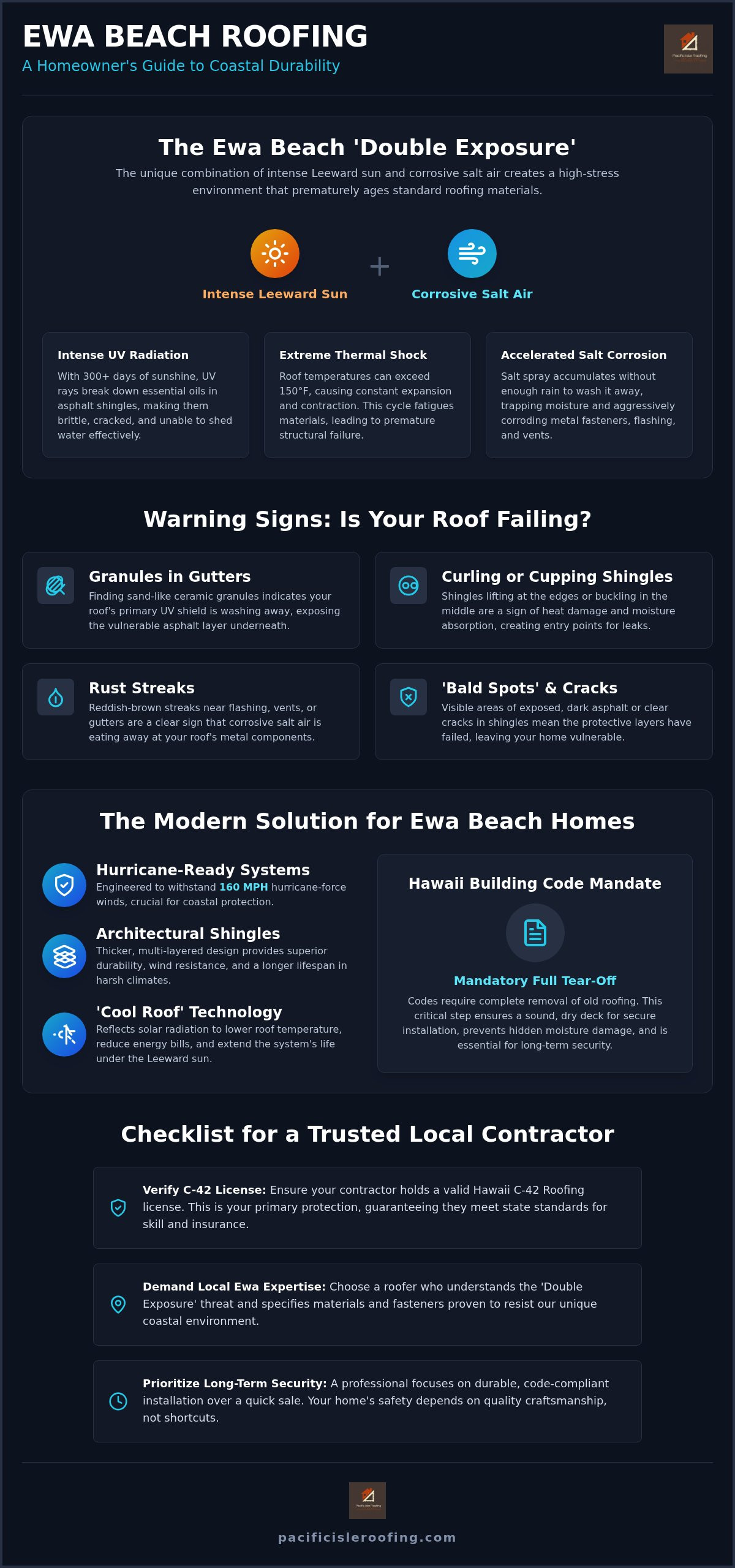
Did you know that the same ocean breeze that makes Ewa Beach beautiful is quietly eating away at the metal fasteners holding your home together? It's a phenomenon known as "double exposure," where intense Leeward heat and corrosive salt air work in tandem to degrade your home's first line of defense. If you've noticed shingles curling or rust streaks appearing near your gutters, you aren't alone. Planning a roof replacement in Ewa Beach requires more than just picking a shingle color; it demands a system engineered to withstand 160 mph hurricane-force winds and relentless UV radiation.
We understand that protecting your family and your investment is your top priority. This 2026 guide provides the clarity you need to make informed decisions about materials that lower cooling costs and meet current Honolulu building codes. You'll learn how to identify high-quality craftsmanship, understand mandatory tear-off requirements, and find a licensed, local neighbor who prioritizes your long-term security over a quick sale. By the end of this article, you'll have a clear roadmap for securing a durable, leak-proof roof that stands up to the unique demands of the Ewa coastline.
- Understand how the "double exposure" of intense Leeward sun and corrosive salt air accelerates wear on your home's exterior defenses.
- Learn to distinguish between cosmetic aging and structural failures, such as granule loss, that indicate it's time for a roof replacement in Ewa Beach.
- Compare high-performance materials like architectural shingles and "Cool Roof" technologies designed to lower energy bills and withstand 160 mph winds.
- Discover what to expect during the professional installation process, including why Hawaii building codes mandate a full tear-off for long-term security.
- Verify why a Hawaii C-42 Roofing Contractor license and a strong local presence are the best protections for your investment.
The Ewa Beach 'Double Exposure': Why Your Roof Ages Differently
Ewa Beach presents a unique challenge for residential structures that many mainland contractors simply don't understand. While homeowners in cooler, windward areas deal with persistent moisture, those on the Leeward side face a "double exposure" that is often more destructive over time. This specific environmental stressor combines the intense radiation of the Leeward sun with a constant, fine mist of coastal salt spray. For anyone considering a roof replacement in Ewa Beach, recognizing this localized climate is the first step toward choosing a system that will actually last.
Unlike other parts of Oahu, Ewa's relatively low annual rainfall actually works against the homeowner. In wetter regions, frequent rain showers naturally rinse salt deposits from the roof surface. In Ewa Beach, salt can accumulate for weeks or even months. This buildup creates a highly corrosive environment for standard galvanized fasteners and flashing. Over time, these salt crystals pull moisture from the morning dew, trapping it against the roof deck and accelerating the degradation of the entire system. This process creates a high-stress zone where materials face three primary threats:
- Intense UV radiation that dries out protective asphalt oils.
- Thermal expansion and contraction caused by 300+ days of direct Leeward sun.
- Accelerated corrosion of metal components due to a lack of rinsing rain.
Leeward Heat and UV Degradation
With over 300 days of sunshine each year, roofs in Ewa Gentry and Ocean Pointe experience extreme thermal cycling. During the day, temperatures on the roof surface can exceed 150 degrees Fahrenheit, causing materials to expand. As the sun sets, the rapid cooling causes these same materials to contract. This constant movement places immense stress on the Asphalt shingle, eventually leading to cracks and structural fatigue at the edges of the roof.
UV rays act as a silent catalyst in this process. They penetrate the protective granules and break down the essential oils that keep shingles flexible. Once these oils evaporate, the shingles become brittle and lose their ability to shed water effectively. This explains why a roof in Ewa often shows signs of failure years earlier than a similar roof in the cooler, shaded valleys of Kaneohe. Without the right UV-resistant materials, your home's first line of defense can literally bake until it fails.
The Corrosive Impact of Coastal Salt Air
The danger zone for salt spray extends roughly three miles inland, covering nearly all of Ewa Beach. For homes in this radius, the air is thick with microscopic salt particles. When these particles settle, they don't just sit on the surface; they act as a desiccant. They trap moisture against the shingles and underlayment, leading to a condition often described as "shingle rot." This hidden moisture can weaken the roof deck long before you notice a leak inside your home.
Standard mainland roofing standards are frequently insufficient for this environment. A product rated for a dry climate in Arizona isn't designed for the specific chemistry of Ewa's air. When planning a roof replacement in Ewa Beach, it's vital to prioritize materials and fasteners specifically treated to resist this chemical assault. Using standard components in this high-stress zone often leads to premature failure, making professional local knowledge an absolute necessity for long-term protection.
Warning Signs: When to Consider Roof Replacement in Ewa Beach
Identifying the right time for a roof replacement in Ewa Beach often begins with a simple observation during routine yard work. While some signs of aging are merely cosmetic, others indicate that the structural integrity of your home is at risk. It's vital to distinguish between a roof that simply looks weathered and one that can no longer defend against the elements. In our high-heat environment, shingles don't just wear out; they undergo a chemical transformation that leaves them brittle and ineffective.
One of the most critical warning signs is the presence of ceramic granules in your gutters or at the base of downspouts. These granules serve as the primary shield against UV radiation. When they wash away, the underlying asphalt is exposed to the direct Leeward sun, leading to "bald spots." Without this protection, the shingles lose their water-shedding capabilities rapidly. If you see a shimmering, metallic look in your gutters, your roof is literally shedding its protective layer.
The intense sun in the Kapolei-Ewa corridor also causes shingles to "curl" or "cup." This physical distortion happens when the top of the shingle dries out and shrinks faster than the bottom. These lifted edges create a perfect catch for wind-uplift. During seasonal Kona storms, these compromised tabs act like small sails. Even moderate gusts can peel back brittle shingles, exposing the roof deck to immediate water damage and creating a cycle of decay that is difficult to stop without professional intervention.
Visual Red Flags for Homeowners
Homeowners should look for cracked shingles, which are a clear byproduct of years of thermal cycling. These fractures allow moisture to bypass the primary barrier and soak into the underlayment. You may also notice dark, vertical streaks on your roof. While many assume this is just dirt, it is often a hardy algae that thrives in Hawaii's humidity. This algae feeds on the limestone filler within the shingles, slowly eating away at the very material that keeps your home dry.
Hidden Damage and Structural Risks
The most dangerous threats are often those you cannot see from the ground. Compromised flashing around vents and valleys allows salt-laden air to reach your home's wooden skeleton. This leads to what professionals call roof rot, which is the progressive degradation of wooden supports caused by moisture trapped in Hawaii's 80% average humidity. Once the decking is soft, the safety of the entire structure is compromised.
Before minor leaks turn into major structural repairs, it's essential to verify the health of your system. You can use the Hawaii DCCA license verification tool to ensure any professional you consult is properly registered and insured. A detailed roofing inspection can provide the peace of mind you need to decide if a roof replacement in Ewa Beach is the right next step for your property.
The Best Materials for a Durable Ewa Beach Roof
Selecting the right components for a roof replacement in Ewa Beach isn't just a matter of aesthetics. It's a technical decision that directly impacts how your home handles the Leeward sun and corrosive coastal environment. While traditional 3-tab shingles were common in older Ewa developments, modern architectural shingles are now the baseline for durability. These multi-layered shingles provide superior wind resistance and a thicker profile, which is vital when trade winds pick up or seasonal storms roll through. Beyond the shingles themselves, the "Cool Roof" technology integrated into modern materials reflects more sunlight, which can significantly lower your home cooling costs in our sun-drenched climate.
The underlayment is the unsung hero of a waterproof island roof. This secondary barrier sits directly on the wooden deck, providing a final line of defense if a shingle is damaged or blown off. In Ewa Beach, we prioritize high-quality synthetic underlayments over traditional felt. Synthetic options don't absorb moisture and are far more resistant to the extreme heat that can cause lesser materials to become brittle and fail prematurely.
Selecting High-Performance Asphalt Shingles
When choosing shingles for a tropical environment, Algae-Resistant (AR) properties are essential. These shingles are manufactured with copper-containing granules that prevent the growth of the black algae streaks discussed in previous sections. Additionally, you should look for shingles with a high-wind rating. Current building standards often require structures to withstand winds up to 160 mph, making high-performance shingle adhesive strips a non-negotiable feature. Color selection also plays a practical role; choosing lighter shades or "cool" tones helps reflect UV radiation, keeping your attic temperature lower and extending the life of the underlying structure.
Corrosion-Resistant Fasteners and Flashing
Hardware is where many standard installations fail in coastal zones. In Ewa Beach, standard galvanized nails are often insufficient because salt air eventually bypasses the shingle layers and begins corroding the fasteners from the inside out. Stainless steel nails are the gold standard for any roof replacement in Ewa Beach. They're impervious to salt-induced rust, ensuring that your shingles remain securely anchored for their entire intended lifespan.
We also emphasize the use of high-grade aluminum or lead flashing around vents and chimneys. These materials don't degrade when exposed to salt spray, unlike cheaper galvanized steel alternatives. Properly installed drip edges are vital for protecting fascia boards during heavy rain, as they direct water away from the roof's edge and into the gutter system. By investing in these corrosion-resistant components, you're building a system designed for decades of reliability rather than just a few years of coverage.
The Roof Replacement Process: What Ewa Homeowners Should Expect
A successful roof replacement in Ewa Beach requires careful coordination between the homeowner and the contractor. Most residential projects take between three to five days, depending on the size and complexity of the roofline. This timeline includes everything from the arrival of the disposal container to the final magnetic sweep of your lawn. We understand that a construction project can be disruptive, so we prioritize a methodical workflow that keeps you informed at every stage.
In the City and County of Honolulu, a "full tear-off" is mandatory. Local building codes prohibit installing a new layer of shingles over an existing one. This requirement is vital for your home's long-term health. It allows us to inspect the underlying wooden deck for the "roof rot" mentioned earlier and confirm that the structural fasteners are anchored into solid wood. By removing the old materials entirely, we ensure the new system meets the 160 mph wind resistance standards required for modern Hawaii homes.
Logistics in Ewa's residential tracts, such as Ewa Gentry or Ocean Pointe, demand a contractor with local experience. Narrow streets and shared driveways require precision when delivering heavy pallets of shingles or positioning disposal bins. We coordinate these movements carefully to ensure your neighbors aren't inconvenienced and your driveway remains protected. Our goal is to maintain a clean and organized job site that reflects our commitment to professional excellence.
Preparation, Permitting, and Planning
Before any work begins, we secure the necessary building permits from the Honolulu Department of Planning and Permitting (DPP). This process ensures your project complies with the 2018 International Building Code and local amendments. We also monitor Leeward weather patterns closely. While Ewa is generally dry, we only open sections of your roof when a clear weather window is confirmed. This discipline protects your home's interior from sudden tropical showers during the transition. We use heavy-duty tarps to shield your landscaping and ensure safe access to your home throughout the process.
Installation Standards and Craftsmanship
Craftsmanship in Hawaii means building for wind and heat. Proper staggering of shingle joints is essential to prevent water from migrating under the tabs during high-velocity wind events. We pay special attention to high-risk areas, such as valleys and vent pipes, applying reinforced sealing techniques that exceed standard manufacturer requirements. Once the installation is complete, we perform a thorough magnetic sweep. This process recovers stray nails from your driveway and lawn, ensuring your property is safe for your family and vehicles. A final inspection confirms that every detail meets our high standards of durability and aesthetics.
Ready to secure your home with a system built for the Leeward coast? Schedule your Roof Installation Oahu with our experienced local team today.
Choosing the Right Ewa Beach Roofing Contractor
Selecting a professional partner for your roof replacement in Ewa Beach is a decision that impacts your home's security for the next several decades. It's about more than just comparing estimates; it's about finding an expert who understands the technical demands of the Leeward coast. A contractor who is unfamiliar with the "double exposure" of salt and sun may use standard components that fail prematurely. Choosing a local specialist ensures that your project is managed with the specific materials and techniques required for long-term island durability.
A Hawaii C-42 Roofing Contractor license is your primary protection as a homeowner. This specific classification ensures the contractor has met the state's rigorous requirements for technical competency and financial stability. Beyond the license, a reliable professional must carry both general liability and workers' compensation insurance. While general liability protects your property from accidental damage, workers' compensation ensures you aren't held liable for any injuries that occur on your job site. These credentials are non-negotiable for anyone operating with integrity on Oahu.
Evaluating warranties is another critical step in this high-salt, high-UV environment. Many standard manufacturer warranties contain specific exclusions or shortened durations for homes located within a certain distance of the shoreline. A seasoned local expert will help you navigate these complexities, ensuring you select high-performance products that carry verified coverage for the Ewa Beach climate. This transparency is a hallmark of a contractor who prioritizes your peace of mind over a quick sale.
Verifying Local Credentials
Homeowners should always perform due diligence by using the Hawaii Department of Commerce and Consumer Affairs (DCCA) website to verify a contractor's standing. You can confirm that their license is active and check for any history of complaints or disciplinary actions. Be wary of "storm chaser" contractors who appear after seasonal weather events but lack a physical presence or history on the island. These transient providers often disappear before a warranty claim can be filed, leaving you without recourse if a leak develops during the next Kona storm.
The Pacific Isle Roofing Commitment
Pacific Isle Roofing brings over 20 years of specialized experience to residential structures from Ewa Gentry to Ocean Pointe. Our focus on residential roofing means we understand the specific nuances of family homes and the high stakes involved in protecting your primary investment. We pride ourselves on being a stable, trustworthy pillar within the community, offering the quiet authority that comes from decades of practical experience. Our mission is to provide you with a durable, leak-proof system that stands as a testament to local craftsmanship and neighborly service.
Schedule your professional roof inspection with Pacific Isle Roofing today.
Securing Your Home for the Decades Ahead
A resilient roof is more than just a structural requirement; it's the foundation of your family's safety and long-term financial security. Navigating the unique environmental demands of the Leeward coast requires a specialized approach that accounts for both the relentless sun and the corrosive salt air. By choosing materials engineered for tropical durability and verifying local credentials, you ensure that your investment will withstand the tests of time and weather.
Investing in a high-quality roof replacement in Ewa Beach provides immediate peace of mind and significantly enhances your property's value. As a locally owned specialist with over 20 years of experience, Pacific Isle Roofing focuses exclusively on residential structures across Oahu. We bring the quiet authority of a Licensed Hawaii Contractor (C-42-31088) to every project, ensuring that every fastener and shingle is placed with precision and integrity. Don't wait for a minor leak to become a major structural failure. Take the first step toward a more secure, energy-efficient home by consulting with a neighborly expert who understands the specific needs of your community.
Protect your Ewa Beach home with an expert roof replacement from Pacific Isle Roofing and enjoy the confidence that comes with professional craftsmanship.
Frequently Asked Questions
How much does a roof replacement cost in Ewa Beach?
Total investment for a new roof depends on several factors, including the square footage of your home, the specific materials you select, and the complexity of your roofline. While material costs fluctuate, a full replacement ensures your home complies with mandatory Honolulu County tear-off codes and provides a fresh start for your structural protection. It's best to request a professional inspection to receive an accurate assessment tailored to your property's unique requirements.
How long does an asphalt shingle roof last in Hawaii's climate?
Most asphalt shingle systems in Hawaii have a functional lifespan of 15 to 20 years, which is shorter than many mainland averages. This accelerated aging is caused by the intense UV radiation and corrosive salt air that define our island environment. The "double exposure" effect we discussed earlier dries out protective oils more quickly, making regular maintenance and the choice of high-performance materials essential for maximizing longevity.
Do I need a permit for a roof replacement in Honolulu County?
Yes, the Honolulu Department of Planning and Permitting (DPP) requires a building permit for all residential reroofing projects. This oversight ensures that your roof replacement in Ewa Beach adheres to the 2018 International Building Code and specific local safety amendments. A licensed contractor typically manages this permitting process to ensure your project is legally compliant and meets all current hurricane wind speed requirements.
What is the best type of shingle for a house near the Ewa Beach coastline?
High-performance architectural shingles with Algae-Resistant (AR) technology are the most reliable choice for coastal homes. These shingles offer a thicker profile and stronger adhesive strips designed to withstand trade winds and seasonal storms. We recommend pairing these with stainless steel fasteners and lighter-colored granules to reflect the intense Leeward sun and resist the corrosive effects of salt spray.
Can I just repair a few shingles instead of a full replacement?
Repairs are often a viable option for localized damage on a relatively new roof where the shingles remain flexible. However, if your roof is over 15 years old or shows signs of widespread granule loss, a patch may only provide a temporary solution. If we discover underlying roof rot or brittle shingles during an inspection, a full replacement is usually the most responsible way to ensure your home remains leak-proof.
Does a new roof really help lower my home's cooling costs?
Modern roofing systems engineered with "Cool Roof" technology are highly effective at reducing heat transfer into your living space. By reflecting a higher percentage of UV rays, these materials keep attic temperatures lower and reduce the demand on your air conditioning. Homeowners in the hot Ewa Beach corridor often notice a significant decrease in their monthly energy bills after upgrading to a more reflective, modern system.
How do I know if my roof has wind damage after a Kona storm?
Visible signs of wind damage include shingles that are lifted, creased, or missing entirely from the roof deck. You might also notice a sudden accumulation of granules in your gutters or "sailing" shingles that have curled at the edges. Since some wind damage isn't visible from the ground, it's wise to have a professional check your roof's integrity after any significant weather event to prevent slow leaks.
What is the difference between architectural and 3-tab shingles for Hawaii?
Architectural shingles are multi-layered and significantly heavier than traditional 3-tab shingles, providing a much higher wind resistance rating. While 3-tab shingles are a single flat layer, the dimensional construction of architectural shingles offers better protection against the thermal expansion caused by our intense sun. For a durable roof replacement in Ewa Beach, the added thickness and superior adhesive of architectural shingles make them the standard for island homes.


