
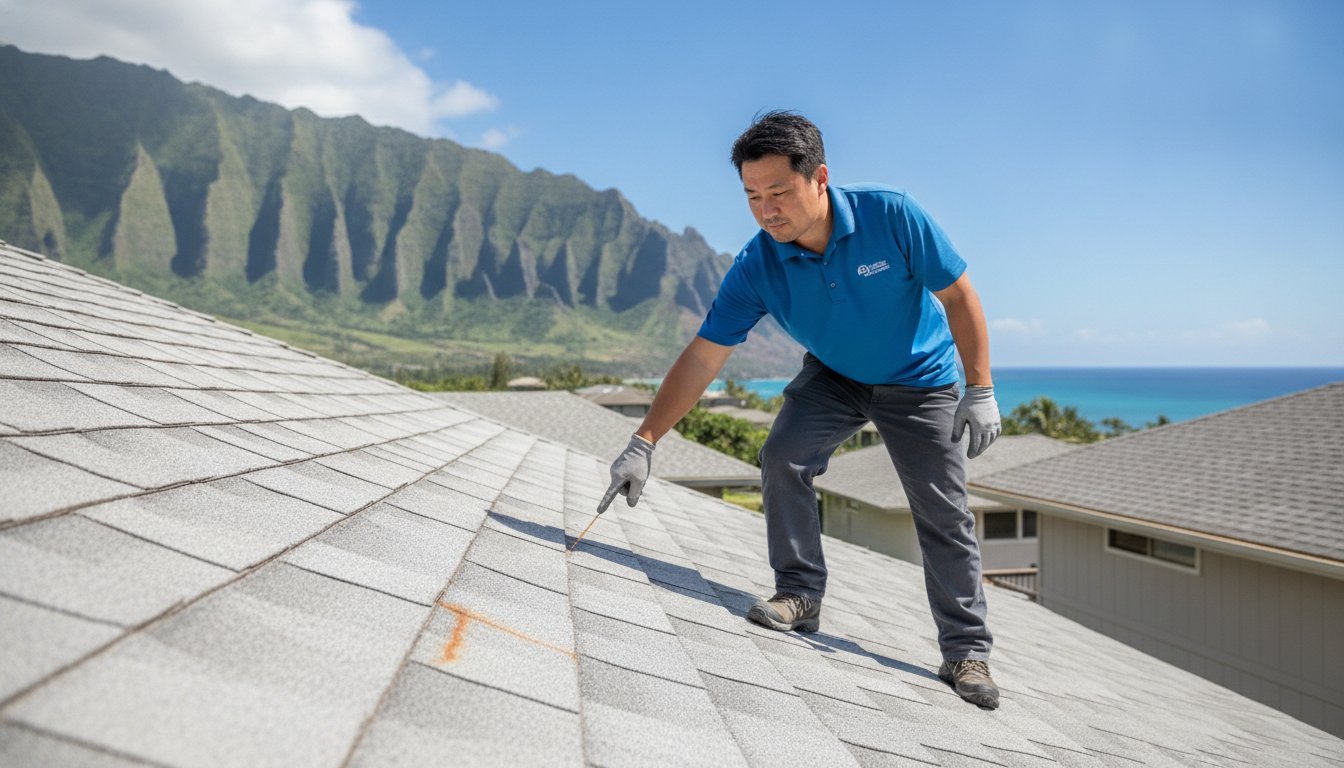
What if the refreshing ocean breeze drifting through your windows was actually a silent chemical assault on your home's primary defense? For Oahu homeowners, salt air roof damage is a persistent reality that goes far beyond simple aesthetics. Those orange rust streaks and brittle shingles are more than just eyesores; they're the visible signs of a corrosive process that can compromise your family's safety and lead to premature roof failure. It's natural to feel concerned about the longevity of your investment when living in such a demanding coastal environment.
You deserve to feel confident that your roof can withstand the unique pressures of island life. This guide will show you exactly how salt air silently degrades your roofing materials and provide the professional strategies you need to safeguard your Hawaii home from coastal corrosion. We'll explore the science of "rusty nail syndrome," discuss the impact of Hawaii's 2026 "white roof" mandates, and explain how a professional inspection can identify hidden vulnerabilities before they become costly structural issues. Understanding these specific risks is the first step toward ensuring your home remains a stable and secure pillar for your family.
Key Takeaways
- Understand how Oahu's unique humidity and windward trade winds transform salt spray into a corrosive electrolyte that accelerates roof deterioration.
- Learn how salt air roof damage affects different materials, from weakening asphalt shingle bonds to causing severe pitting on standard metal surfaces.
- Discover the critical warning signs of coastal corrosion, including rust streaks from nail heads and bubbling on drip edges, that signal hidden structural risks.
- Explore mitigation strategies like the "freshwater rinse" and the necessity of using Type 316 stainless steel hardware to extend your roof's lifespan in marine zones.
- Find out how a specialized residential inspection can identify microclimate-specific vulnerabilities before they lead to premature roof failure.
The Science of Salt Air Roof Damage on Oahu
Living on Oahu means enjoying the beauty of the Pacific, but for your home, that proximity comes with a hidden chemical cost. Salt air roof damage begins when microscopic sodium chloride (NaCl) particles settle on your roof's surface. When these particles combine with the island's high humidity, they create a corrosive electrolyte solution. This solution acts like a battery, facilitating a chemical reaction that accelerates the breakdown of metal components and protective coatings. It's a relentless process that continues 24/7 in our tropical environment, regardless of whether you can see the ocean from your front door.
The Windward trade winds play a vital role in this cycle. These consistent breezes carry salt spray from the breaking surf and transport it miles inland. While beachfront homes experience direct "salt spray," which consists of larger, visible droplets, homes further inland are affected by "salt air." These invisible, fine aerosol particles are light enough to stay suspended and can reach deep into the valleys of the Ko'olau range. To understand how these particles move, it helps to look at The Science of Salt Air and how aerosolization impacts coastal structures across the Pacific.
Oahu Microclimates and Corrosion Rates
Not every neighborhood on Oahu faces the same level of risk. Windward communities like Kailua and Kaneohe endure the brunt of the salt-laden trade winds, leading to significantly higher corrosion rates than Leeward areas like Kapolei or Ewa Beach. We typically define the highest risk "Salt Zone" as any property within 3,000 feet of the shoreline. However, elevation also matters; the salt concentration can actually increase as air is pushed upward by the island's topography. This means a hillside home in a valley might face more environmental stress than a home at sea level protected by a natural windbreak.
The Chemistry of Deliquescence
Most homeowners assume their roof is safe when the sun is shining, but the chemistry of salt tells a different story. Salt crystals are hygroscopic, meaning they naturally attract and trap moisture from the atmosphere. Deliquescence is the process where salt turns into a liquid corrosive film at 75% humidity. This allows the corrosive solution to sit against your shingles and flashing even on dry, sunny days when you'd expect the roof to be moisture-free. Hawaii's intense UV radiation then compounds the problem by heating this film, which degrades the chemical integrity of protective coatings and significantly shortens the lifespan of your roofing system.
How Salt Air Degrades Common Hawaii Roofing Materials
Salt air roof damage doesn't just affect the surface of your home; it fundamentally alters the structural integrity of your roofing materials. While a product might carry a 30-year warranty on the mainland, Oahu's unique environmental stressors often cut that lifespan significantly. Understanding how different materials react to our coastal air is the first step in making a wise investment for your property. Every component, from the visible shingles to the hidden nails, faces a specific chemical challenge in our island climate.
The Vulnerability of Asphalt Shingles
Asphalt shingles are the most common choice on Oahu, but they are particularly susceptible to the drying effects of sodium chloride. The salt particles act as a desiccant, drawing essential oils out of the bitumen layer that gives shingles their flexibility. This process weakens the bond holding the protective granules in place. Once these granules shed, the underlying fiberglass matting is exposed to intense UV rays, causing the shingle to become brittle and lose its wind resistance. While many brands offer algae resistance to prevent dark streaks, this feature does not stop the chemical breakdown associated with salt air roof damage.
Metal Corrosion: Galvanic and Uniform
For homes near the shore, the choice of metal is critical. Standard galvanized steel often fails prematurely because the zinc coating is sacrificed too quickly in a marine environment. We've seen many instances where The Science of Salt Air Corrosion manifests as uniform rust across the entire panel. Even more dangerous is galvanic corrosion, which occurs when dissimilar metals, such as a steel panel and a copper pipe, come into contact. In 2026, the industry standard for coastal defense has shifted toward aluminum or copper, often paired with high-performance PVDF coatings like Kynar 500 to reflect solar heat and resist chemical etching.
Clay and concrete tiles are durable but porous. When salt water is absorbed into the tile, the salt eventually crystallizes within the material's pores. This internal expansion causes "spalling," where the surface of the tile flakes or chips away over time. However, the most overlooked issue is the "Weakest Link" theory. Often, the roofing material itself appears to be in good condition, but the fasteners underneath have corroded entirely. The 2026 Hawaii building codes now require roofs to withstand winds up to 160 mph. If the nails have lost their grip due to rust, the entire system is vulnerable to lifting during a storm.
Ensuring your system utilizes marine-grade components is vital for long-term security. It's a good idea to schedule professional roofing inspections to verify the health of your fasteners and flashing before the next hurricane season begins.
Identifying Warning Signs of Coastal Corrosion
Early detection is the most effective way to prevent salt air roof damage from escalating into a full system failure. While many homeowners focus on the appearance of their shingles, the most dangerous signs often occur where the eye cannot easily reach. On Oahu, the combination of high humidity and salt aerosol creates a unique set of red flags that differ from mainland roofing issues. Recognizing these indicators early can save you from the high cost of emergency repairs or premature replacement.
One of the most obvious signs is the presence of dark orange or reddish rust streaks. These typically originate from nail heads that have begun to corrode beneath the shingles or from metal flashing that has lost its protective coating. Other critical warning signs include:
- Pitting and Bubbling: Small craters or raised bubbles on metal surfaces, especially along drip edges, indicate that salt is eating through the finish.
- Granule Accumulation: Check your gutters for a heavy buildup of mineral granules. This suggests the bitumen bond in your asphalt shingles is failing due to salt exposure.
- Backed-Out Fasteners: When a nail shank corrodes, it loses its grip in the wood deck. This causes the fastener to "pop up," creating a gap that allows water to penetrate.
- Tile Spalling: On concrete or clay roofs, look for flaking or cracking along the edges where salt crystals have expanded within the material's pores.
Inspecting the 'Hidden' Metal Components
Flashing around chimneys, skylights, and plumbing vents is often the first line of defense to fail. Because these components are frequently made of thinner metal than the rest of the roof, they succumb to salt air roof damage much faster. It's also vital to check the interior of your gutters for salt crusting. This white, powdery residue can trap moisture against the metal, leading to pinhole leaks that are difficult to spot from the ground. In some cases, salt air can even enter the attic through ridge vents, leading to "salt rot" on the underside of the roof deck and the degradation of structural fasteners from the inside out.
Professional vs. DIY Inspection
Safety is the primary concern when assessing a roof in a coastal zone. Salt-brittled shingles can be incredibly fragile; walking on them during a DIY check can cause more harm than good by cracking the very materials you're trying to protect. By 2026, drone inspections have become the professional standard for Oahu coastal assessments. Drones allow for high-resolution imaging of every fastener and seam without the risk of physical damage to the roof surface. To ensure your home is truly protected, you should schedule a professional roofing inspection with Pacific Isle Roofing to identify these subtle signs of corrosion before they compromise your home's integrity.

Maintenance and Mitigation Strategies for Coastal Homes
Proactive maintenance is the cornerstone of long-term home protection on Oahu. While you cannot stop the trade winds from carrying salt aerosol to your doorstep, you can neutralize their corrosive effects through consistent, disciplined care. Preventing salt air roof damage requires a shift from a "fix it when it leaks" mindset to a defensive strategy that prioritizes the health of your home's exterior components. By taking these steps, you ensure that your roof remains a reliable shield against the elements for decades.
One of the simplest yet most effective tools in your arsenal is the "Freshwater Rinse." Periodically washing your roof with a standard garden hose helps dilute and remove accumulated salt deposits before they can undergo deliquescence. It's vital to avoid using a pressure washer, as the high-velocity stream can strip protective granules from shingles or damage delicate sealants. Instead, allow the water to flow naturally down the roof's slope, mimicking a heavy rainstorm. This process is especially important for areas under eaves or behind chimneys where natural rainfall might not reach to wash away salt crusting.
Vegetation management also plays a surprising role in coastal defense. Salt-tolerant trees, such as Ironwoods or Sea Grapes, are excellent at trapping salt spray within their foliage. When these branches overhang your roof, they drop salt-laden debris and create shade that prevents the roof from drying quickly. Keeping a clear perimeter around your home reduces the amount of moisture and salt held against your roofing materials, which significantly slows the rate of decay.
The Coastal Maintenance Schedule
Consistency is key for homes in high-impact zones like Kailua or Ewa Beach. For properties located within one mile of the ocean, the 2026 standard for coastal maintenance frequency in Hawaii recommends a thorough freshwater rinse every quarter. These homeowner self-checks should be supplemented by an annual professional assessment to identify "invisible" galvanic corrosion occurring where different metal components meet. Catching these chemical reactions early prevents the need for extensive roof leak repairs later and preserves the structural integrity of your home.
Upgrading to Salt-Resistant Components
When the time comes for a replacement or a significant repair, investing in marine-grade materials is a non-negotiable requirement for island longevity. This starts with the hardware. Type 316 stainless steel fasteners are the gold standard for Oahu installations because they offer superior resistance to chloride-induced pitting compared to standard galvanized nails. Additionally, replacing old lead or steel flashing with copper or high-grade aluminum ensures that your roof's "weakest links" remain secure. Modern specialized underlayments also provide an extra layer of protection, acting as a secondary barrier against salt air roof damage if the primary roofing material is ever compromised.
Maintaining a coastal home is a significant responsibility, but you don't have to manage it alone. If you're concerned about existing corrosion or want to upgrade your home's defenses, it's time to contact the experts for professional roofing inspections to ensure your protection is up to current standards.
Expert Solutions: Pacific Isle Roofing’s Coastal Defense
Addressing salt air roof damage requires more than just a standard installation; it demands a deep understanding of Oahu's unique environmental stressors. With over 20 years of local experience, Pacific Isle Roofing serves as a protective guide for homeowners navigating the complexities of coastal property maintenance. As a licensed contractor (C-42-31088), we specialize in residential roofing systems designed to endure the specific microclimates of our island. We understand that a roof in Kailua faces a vastly different chemical assault than one in Kapolei, and we tailor our approach to meet those distinct needs.
Our commitment to craftsmanship is rooted in the belief that every home deserves a defense system built to last. We focus exclusively on residential properties, allowing us to dedicate our full attention to the nuances of home protection. Whether you require targeted roof leak repairs to stop "salt rot" before it spreads or a complete system overhaul, our team prioritizes long-term security over temporary fixes. We treat every project as a mission to provide peace of mind for our neighbors across the community.
Tailored Residential Roof Replacements
When a roof reaches the end of its functional life, we provide expert guidance on material selection based on your home's proximity to the shoreline. Our replacement process involves a thorough evaluation of the structural decking. If salt air has penetrated the system, it can lead to internal rot that compromises the entire building. We identify and replace these damaged sections to ensure your new roof has a stable foundation. From selecting salt-resistant drip edges to installing high-performance ridge vents, we ensure every component of your new roof installation on Oahu is ready for the marine environment.
Protecting Your Island Investment
Investing in salt-resistant materials and professional installation provides a significant return on investment through extended roof longevity and reduced maintenance costs. In Hawaii's demanding climate, the "25% rule" often dictates when a full replacement is necessary to meet current building codes. By choosing marine-grade components now, you avoid the cycle of frequent, costly repairs. Our local accountability means we stand by our work, providing a stable and trustworthy pillar for the community. We believe in clear, open dialogue and a disciplined approach to every detail of your home's protection. To ensure your home is prepared for the challenges of 2026 and beyond, contact Pacific Isle Roofing for an expert coastal roof assessment.
Securing Your Home’s Future Against the Pacific Elements
Living on Oahu offers unparalleled beauty, but it also requires a disciplined approach to home maintenance. We've explored how the interaction between trade winds and high humidity creates a constant chemical assault on your roofing system. Understanding that salt air roof damage is a 24/7 process helps you move from reactive repairs to a strategy of long-term preservation. By prioritizing marine-grade materials like Type 316 stainless steel and adhering to a consistent freshwater rinse schedule, you'll significantly extend the life of your investment.
As a local pillar with 20+ years of Oahu residential expertise, Pacific Isle Roofing is dedicated to your family's safety. We specialize in salt-resistant material systems and provide the seasoned authority needed to navigate our island's unique microclimates. Don't wait for a visible leak to address the hidden corrosion that might be weakening your fasteners today. Our mission is to ensure your roof remains a stable and secure defense for decades to come.
Protect your home from coastal corrosion-Get a professional Oahu roof inspection today. As a licensed Hawaii Contractor (C-42-31088), we're here to guide you toward the most reliable solutions for your specific neighborhood. You can feel confident knowing your home is in expert hands.
Frequently Asked Questions
How close to the ocean do I need to be to worry about salt air damage?
Homes located within 3,000 feet of the shoreline are in the highest risk category for accelerated corrosion. In these coastal zones, the concentration of salt aerosol is dense enough to settle on surfaces daily. Properties in neighborhoods like Kailua or Ewa Beach often see the most immediate impact due to their direct exposure to the Pacific.
Can salt air damage my roof if I don't live right on the beach?
Yes, salt air roof damage can affect homes located miles inland. Fine salt particles are light enough to remain suspended in the atmosphere and are carried deep into Oahu's valleys by the Windward trade winds. Even if you cannot see the ocean, the high humidity on the island can activate salt crystals that have settled on your roof.
What is the best roofing material for a coastal home in Hawaii?
Aluminum and copper are the most resilient choices for metal roofing because they naturally resist the chemical breakdown caused by sodium chloride. If you prefer asphalt shingles, it's essential to select a high-quality system that utilizes marine-grade underlayments and corrosion-resistant hardware. These materials are specifically engineered to withstand the unique pressures of a tropical coastline.
How often should I have my roof inspected if I live in a salt zone?
An annual professional assessment is the recommended standard for homes in Oahu's coastal microclimates. These yearly checks allow a specialist to identify subtle signs of fastener failure or sealant degradation that might be missed during a ground-level view. Regular oversight is the most effective way to ensure your home remains protected before the hurricane season begins.
Are stainless steel nails really necessary for my Oahu roof?
Type 316 stainless steel nails are a non-negotiable requirement for any roof installation near the ocean. Standard galvanized nails often succumb to rust in as little as three to five years when exposed to salt air. Using marine-grade fasteners prevents "rusty nail syndrome," ensuring your shingles or panels remain securely attached to the roof deck during high winds.
Can I wash the salt off my roof myself with a garden hose?
A gentle freshwater rinse with a standard garden hose is an excellent maintenance practice for most homeowners. This process helps dilute salt deposits before they can bond to your roofing materials. You should never use a pressure washer for this task, as the intense force can strip away protective granules or compromise the integrity of your shingle bonds.
Does salt air damage happen faster on metal or shingle roofs?
The rate of damage depends heavily on the specific grade of the material used. Standard galvanized steel can fail much faster than asphalt shingles in a marine environment. However, a high-quality aluminum roof will typically outlast shingles by decades because it does not lose essential oils or become brittle when exposed to salt aerosol and intense UV rays.
What are the first visible signs that salt air is affecting my roof?
The earliest indicators of salt air roof damage include orange rust streaks appearing near the edges of shingles or around plumbing vents. You might also notice small pits or bubbles on metal drip edges and flashing. If you see a significant amount of mineral granules collecting in your gutters, it's a sign that salt is already weakening the asphalt bond of your shingles.


