

In Hawaii, wind damage isn't just about missing shingles; it's often about the invisible compromise of sealant bonds caused by our persistent Trade winds and the intense Kona Low storms of March 2026. After such heavy weather, many homeowners are left wondering if their roof is truly secure or if a hidden leak is already compromising their ceiling. Dealing with the aftermath of a storm is stressful, especially when you're trying to find reliable wind damage roof repair Oahu services while avoiding out-of-state "storm chasers" who lack local accountability. You deserve the peace of mind that comes from knowing exactly where your home stands.
It's completely normal to feel uncertain about whether a few lifted shingles require a minor fix or a major overhaul, particularly with the increased insurance scrutiny following recent events across the islands. This guide will show you how to safely identify wind damage on your property and take the right steps to protect your investment before mold or rot sets in. We'll walk through an essential checklist of signs to look for, explain the difference between surface wear and structural damage, and clarify what you need to know about Hawaii's specific insurance requirements for 2026.
Key Takeaways
- Understand how Oahu’s unique wind patterns, including the "wind uplift" effect, can break roof sealant bonds even if shingles appear intact from the street.
- Master a safe, ground-level visual checklist to identify potential storm damage without the physical risks of climbing onto a compromised roof.
- Learn to distinguish between minor cosmetic wear and a "breach of the envelope" that necessitates urgent wind damage roof repair Oahu to prevent rapid mold growth.
- Follow a disciplined five-step post-storm action plan for documenting damage correctly and implementing safe temporary protection for your property.
- Gain insight into why 20 years of local residential experience and professional Hawaii licensing are vital for navigating the island's unique insurance and repair standards.
Understanding Oahu’s Unique Wind Dynamics and Roof Vulnerability
Oahu's weather patterns create a specific set of challenges for residential roofing that many mainland standards don't fully address. While we often focus on the dramatic impact of a single storm, the reality is that your roof is under constant pressure from local atmospheric conditions. Understanding Oahu's Unique Wind Dynamics is the first step toward maintaining a secure home. Our island's topography, from the steep ridges of the Koolau Range to the flat plains of Ewa, dictates how wind interacts with your shingles.
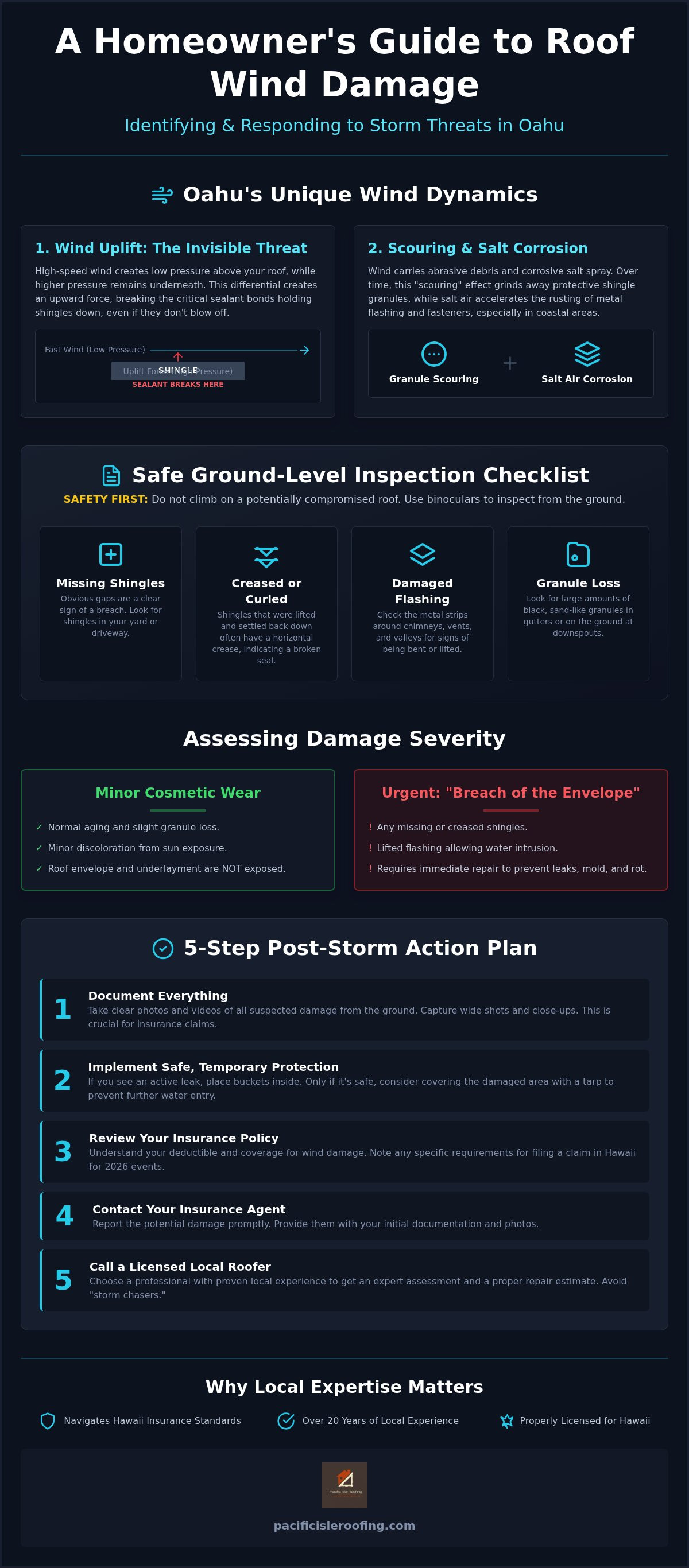
One of the most destructive forces we see is "Wind Uplift." As air moves rapidly over your roof, it creates a pressure differential. The air pressure inside your attic or under the shingles remains higher than the fast-moving air above, creating an upward force. This force works to break the factory sealant bond that holds your shingles together. Once that bond is compromised, shingles can flutter or lift, allowing rain to drive directly onto the underlayment. This is why a roof can look fine from the street while the internal protection is already failing.
We also frequently encounter the "Scouring" effect. Our winds don't just carry air; they carry microscopic debris, dust, and organic material. Over time, this debris acts like sandpaper, slowly grinding away the protective granules on asphalt shingles. This exposure accelerates UV damage and leaves your home vulnerable to leaks. If you suspect your roof has been compromised by these forces, seeking a professional for wind damage roof repair Oahu is essential to prevent long-term structural issues.
Trade Winds vs. Kona Storms: What Your Roof Faces
Most of the year, our 15 to 25 mph Trade winds provide a consistent but gentle stress test. Over twenty years, this steady pressure can weaken fasteners and lift edges. However, Kona storms present a different danger. These south-westerly gusts strike north-facing slopes that are usually sheltered from the Trades. Homes in valley areas like Manoa or Nuuanu face even higher risks due to localized turbulence as wind funnels through the mountains. This sudden change in direction can catch aged shingles off guard, peeling back sections that have survived decades of normal weather.
The Role of Salt Air in Wind Damage Escalation
For properties in Ewa Beach or Kailua, wind damage is never just about the wind. High-velocity gusts carry salt spray deep into the roof's assembly, reaching areas that rain usually washes clean. When wind lifts a piece of flashing or a shingle, it provides an entry point for this corrosive mist. Salt-accelerated corrosion is the rapid chemical degradation of metal roofing components, such as flashing and fasteners, caused by the constant presence of airborne sodium chloride in Hawaii's coastal environment. This chemical reaction makes professional wind damage roof repair Oahu a priority for coastal homeowners who want to avoid systemic failure of their roof's structural integrity.
The Homeowner’s Visual Checklist: Identifying Wind Damage from the Ground
Safety is the most critical factor during any post-storm assessment. It is a common mistake for homeowners to grab a ladder and climb onto their roof immediately after a high-wind event. We strongly advise against this. A roof that has sustained wind damage may have compromised structural integrity or loose materials that make walking on it extremely hazardous. Instead, you can conduct a thorough and effective preliminary inspection from the safety of your sidewalk or driveway using a pair of binoculars.
There is a persistent myth that if you don't see missing shingles, your roof is fine. In reality, visible gaps are only half the story. High winds often lift shingles just enough to break the sealant bond without blowing them off entirely. These shingles then settle back into place, looking normal to the untrained eye while leaving your home wide open to leaks. If you identify any of the subtle signs below, scheduling a professional roofing inspection is the most reliable way to ensure your property remains protected.
Ground-Level Inspection Checklist
While scanning your roofline, look for "creased" shingles. These occur when the wind flips a shingle tab up, creating a permanent horizontal line where the material folded before laying back down. You should also examine your gutters and the base of your downspouts. If you see a heavy accumulation of granules, which look like dark sand, it indicates that the wind has scoured the protective surface of your shingles. Finally, check the "drip edge" and rake metal along the perimeter. If these metal components appear lifted or peeled away, the wind has likely compromised the very edges where your roof is most vulnerable.
Surrounding Property Clues
Your yard often holds the first evidence of a problem. Look for shingle "tabs" or small pieces of black felt underlayment that may have blown into your grass or bushes. These are clear indicators that your roof has suffered a breach. The condition of your surrounding property also tells a story about the wind speeds your roof endured. Damaged fences or downed tree limbs suggest that the gusts were strong enough to cause significant uplift on your shingles. For homeowners following a Post-Storm Action Plan, documenting these property-wide clues can be helpful for insurance records. Also, look for "bruising" on the shingles, which are dark, circular spots caused by the impact of wind-borne branches. These impacts can crack the underlying matting, making wind damage roof repair Oahu a necessary step to prevent moisture from reaching your rafters.
Assessing Severity: When Wind Damage Requires Immediate Professional Repair
Determining the severity of a storm's impact is about more than counting missing shingles. It's about identifying a "breach of the envelope." This term refers to any point where the roof’s primary waterproof barrier is no longer intact. While some wear is merely cosmetic, other signs indicate that your home’s structural integrity is at risk. For homeowners on Oahu, the stakes are elevated by our tropical climate. A minor opening that might be a simple nuisance in a drier climate can become a catastrophic failure here. Professional wind damage restoration focuses on sealing these breaches before they escalate into systemic rot.
The hidden danger of wind damage lies in what you can't see from the ground. Shingles that have unsealed but haven't blown off yet are highly vulnerable to the next gust of wind. These "flopping" shingles no longer provide a water-tight seal, allowing moisture to seep underneath during our frequent afternoon showers. Over time, this constant moisture compromises the adhesive and the fasteners, significantly shortening the remaining lifespan of your roof. If your roof has faced the heavy gusts of a Kona Low, securing a professional assessment for wind damage roof repair Oahu is the most responsible way to protect your long-term investment.
Minor Wear vs. Structural Failure
It's important to distinguish between maintenance issues and storm-driven emergencies. Granule loss, while a sign of aging, usually doesn't require an immediate stop-gap. However, when you see exposed underlayment or bare wood decking, you've moved into emergency territory. In many cases, damaged flashing around chimneys or valleys is more dangerous than a few lost shingles because these areas handle the highest volume of runoff. A single missing shingle creates a point of entry for high-velocity gusts, which can then lift adjacent tabs in a rapid "zipper effect" that strips entire sections of the roof. If you notice shingles that feel loose or appear creased, the factory sealant has failed.
Oahu-Specific Risk Factors
Our local geography plays a massive role in how damage progresses. In areas like Kapolei or Pearl City, residential roofs are often subject to specific wind design standards due to their exposure to open coastal plains or windward gusts. The most immediate threat after a storm isn't just the water; it's the humidity. Hawaii’s air is thick with moisture. Once wind damage allows dampness to reach your roof decking, the dark, warm space of your attic becomes a breeding ground for mold. This biological growth can begin in as little as 48 hours, often before you even see a brown spot on your ceiling. If you suspect water has penetrated your shingles, seeking professional Roof Leak Repairs is the only way to prevent a minor repair from becoming a full-scale remediation project. Addressing wind damage roof repair Oahu early ensures that your home remains a safe and dry sanctuary for your family.
Post-Storm Action Plan: 5 Steps to Protect Your Home After a High-Wind Event
Once you've identified potential issues from the ground, taking immediate action is vital to prevent secondary damage like mold or structural rot. The first 24 hours after a storm are critical for both your home's protection and your future insurance records. Start by documenting the scene thoroughly. Take high-resolution photographs from multiple angles at ground level before any cleanup begins. This visual evidence provides a clear point-in-time record that is invaluable when discussing wind damage roof repair Oahu with your provider or an inspector.
Temporary mitigation, such as tarping, should only be handled if it can be done with zero risk to your safety. If the roof is steep or the weather remains active, it's better to wait for a professional. A poorly secured tarp can actually cause more damage by trapping moisture or creating new trip hazards. While you wait, review your records to understand the difference between your manufacturer’s warranty and your contractor’s workmanship coverage. While a manufacturer covers material defects, storm damage usually falls under your homeowner’s insurance or a workmanship guarantee if the installation was recent.
Immediate Mitigation and Documentation
Don't forget the internal inspection. Go into your attic during daylight hours to look for pinpricks of light or active water stains on the rafters. If you found shingle tabs or felt underlayment in your yard, place them in a labeled bag. Keeping these physical samples helps a professional identify the exact material and age of your roof during a formal assessment. This step is particularly important for homes affected by the March 2026 Kona Low storms, as accurate documentation will be essential for claims filed before the 2028 deadline.
Vetting Your Hawaii Roofing Contractor
After a major event, "storm chasers" often arrive from the mainland to offer quick, cut-rate fixes. These out-of-state entities lack local accountability and often disappear before a leak reappears during the next rainy season. Always verify that your contractor holds a valid Hawaii C-42 license, which requires four years of supervisory experience and proof of insurance. A business with 20 or more years of local history is the gold standard for reliability in our community because they understand our specific building codes and environmental challenges.
Avoid door-to-door solicitors who pressure you for a signature on the spot. A reputable local expert will provide a detailed, written inspection report rather than a vague verbal estimate. This report should function as a comprehensive Roof Health Check, outlining specific vulnerabilities and the necessary steps for wind damage roof repair Oahu. If you need a reliable assessment of your property's condition, you can schedule a professional roofing inspection to ensure every detail is documented correctly for your peace of mind.
Why Local Expertise Matters for Wind Damage Restoration in Hawaii
Local expertise isn't just a marketing phrase; it's a structural requirement in Hawaii. Our island’s diverse micro-climates mean that a home in Ewa Beach requires a different approach than one in Kaneohe. Pacific Isle Roofing has spent over 20 years navigating these nuances. We understand that wind damage roof repair Oahu involves more than just swapping shingles. It requires a deep knowledge of how local building codes, specifically Hawaii’s Appendix W, govern wind design and material standards. This historical knowledge allows us to spot vulnerabilities that out-of-state contractors simply overlook.
Our neighborly dedication is built on a foundation of local accountability. We aren't a transient service provider following a storm path across the mainland. We live and work in these same communities. This means our craftsmanship must stand the test of time and the scrutiny of our neighbors. When we perform an assessment, we're acting as a protective guide for your property. We prioritize your well-being by providing honest, disciplined evaluations that focus on the longevity of your home rather than a quick sale. Our Hawaii license C-42-31088 is a reflection of this commitment to professional standards.
The Pacific Isle Roofing Inspection Process
We view our Roofing Inspections as a comprehensive Roof Health Check. Our process goes beyond a surface-level scan. We conduct a methodical assessment of all roof penetrations, including vent pipes and chimney flashing, where wind-driven rain often finds a path. We also test shingle adhesion and sealant integrity throughout the roof surface. This thoroughness ensures that every hidden compromise is identified before the next heavy weather event arrives, providing you with a clear and organized narrative of your roof's condition.
Long-Term Protection for Oahu Homes
Choosing the right materials is the final step in securing your home. While asphalt shingles remain a popular and cost-effective choice, standing seam metal roofs offer superior resistance to wind uplift and salt-accelerated corrosion. We help you weigh these options based on your specific location and the unique wind loads your property faces. Proactive maintenance remains the most effective way to extend the life of your roof and avoid the high costs of emergency repairs. If you're ready for a stable, honest evaluation of your home’s condition, you can Contact Pacific Isle Roofing for an expert assessment today. Our team is committed to providing the specialized skill and clear dialogue you need for effective wind damage roof repair Oahu.
Securing Your Home Against Future Storms
Protecting your Oahu home starts with a proactive approach to maintenance and a clear understanding of our island's unique wind dynamics. By utilizing a safe ground-level checklist and identifying the subtle signs of "wind uplift," you can catch minor issues before they escalate into structural rot or mold. Remember that visible shingles are only part of the story; the integrity of the sealant bond and the condition of your flashing are what truly keep your family dry during heavy rains.
When your property requires professional attention, choosing a partner with deep historical knowledge of Hawaii's building codes is essential for a successful wind damage roof repair Oahu project. Pacific Isle Roofing brings over 20 years of local residential experience and the specialized skill needed for precise leak detection. As a licensed Hawaii Contractor (C-42-31088), we prioritize your peace of mind through honest dialogue and disciplined craftsmanship. We act as your protective guide, ensuring every detail of your roof's health is addressed with professional confidence.
Schedule Your Professional Wind Damage Assessment with Pacific Isle Roofing. Your home is a stable pillar for your family, and we are here to ensure it remains secure and resilient for years to come.
Frequently Asked Questions
Does my homeowners insurance cover wind damage on Oahu?
Yes, standard homeowners insurance policies on Oahu typically cover damage caused by non-hurricane wind events, such as the Kona Low storms of March 2026. These claims are generally subject to a standard deductible, often ranging from $500 to $1,000, rather than the much higher percentage-based hurricane deductibles. For the March 2026 storms, homeowners generally have until March 2028 to file a claim under their standard policy.
How much wind can a standard asphalt shingle roof handle?
Modern architectural asphalt shingles are typically rated to withstand wind speeds between 110 and 130 mph when installed according to Hawaii’s specific building codes. However, the actual performance depends heavily on the age of the roof and the integrity of the factory sealant bonds. Older roofs or those subjected to constant Trade wind pressure may begin to experience uplift at much lower speeds than their original rating suggests.
Can I wait a few months to repair minor wind damage?
You should not delay repairs because Hawaii’s high humidity and frequent showers can lead to rapid mold growth and structural rot. Even if a leak isn't visible inside your home, moisture trapped under a lifted shingle will compromise the roof decking in as little as 48 hours. Promptly addressing a wind damage roof repair Oahu need prevents a localized issue from spreading into a much larger and more expensive restoration project.
What is the 'zipper effect' in roofing wind damage?
The "zipper effect" describes a chain reaction where a single missing or lifted shingle tab allows wind to catch the edge of the adjacent shingle. Once the wind gets underneath the shingles, it creates a mechanical force that peels back an entire row or section in rapid succession. This phenomenon is why a small, ignored breach can lead to the loss of large portions of your roof during a single high-wind event.
How do I know if my roof shingles have 'unsealed'?
Unsealed shingles are identified by looking for "creased" tabs or shingles that appear to sit slightly higher than the rest of the roof surface. While they haven't blown off yet, the broken sealant bond means they are no longer providing a waterproof barrier and will flutter in the wind. A professional inspector can safely test the adhesion of these shingles to determine if the roof's structural integrity has been compromised.
Is a drone inspection better than a manual roof inspection?
A manual inspection is generally superior because it allows a professional to physically feel the shingles and test the strength of the sealant bonds. While drones are excellent for documenting visible damage and accessing steep slopes safely, they cannot detect shingles that have unsealed but settled back into place. Physical touch is required to identify "bruising" and other subtle signs of failure that a camera might miss.
What should I do if I find shingles in my yard after a storm?
You should collect the shingles, place them in a labeled bag, and contact a licensed roofing professional immediately. Finding material in your yard is a definitive sign that your roof's primary protective layer has been breached. Keeping these samples provides valuable evidence for your insurance adjuster and helps your contractor accurately match the materials needed for your wind damage roof repair Oahu.
Why is my roof leaking even though I don't see any missing shingles?
Leaks often occur because "wind uplift" has broken the waterproof seals or shifted the metal flashing around chimneys and valleys without removing the shingles themselves. During intense storms, wind can drive rain horizontally underneath these lifted tabs, allowing water to bypass the shingles and reach the nails and underlayment. This hidden damage is a common cause of leaks that only become apparent once the attic insulation is saturated.


